Series of excavations
Over the past century, starting in Yangshao, a comprehensive picture of Yangshao Culture, dating back 5,000 to 7,000 years, has emerged across China, mainly along the upper and middle reaches of the Yellow River. Related heritage sites were found in 10 provincial-level administrative regions, scattered over a total area of more than 1 million square kilometers. The border area of Henan, Shanxi and Shaanxi provinces was the core of Yangshao Culture.
Wang Wei, president of the Archaeological Society of China, said:"This culture is thus the longest-lasting and most widely influential type of prehistoric culture in China. Covering such a wide area, it also brought a cultural mix and created a foundation for early-stage Chinese civilization at a pivotal time."
Thanks to continuous excavations, more discoveries have been made.
For example, at the Banpo site in Xi'an, capital of Shaanxi, Yangshao Culture dating back 7,000 years was unearthed. The Miaodigou site in Sanmenxia, which is 6,000 years old, reflects the peak time for this culture. Both milestone sites were discovered in the 1950s.
One discovery at the Xipo site in Lingbao, Henan, amazed archaeologists. Architectural ruins with surrounding corridors, covering 516 square meters and including a 204-sq-m indoor space, were unearthed in 2002.
Wei Xingtao, a researcher at the Henan Provincial Institute of Cultural Heritage and Archaeology, said similar "big houses" covering more than 100 sq m were also unearthed from September last year to June at Beiyangping, another site near Xipo. Key discoveries included the carbonized remains of wooden columns and beams.
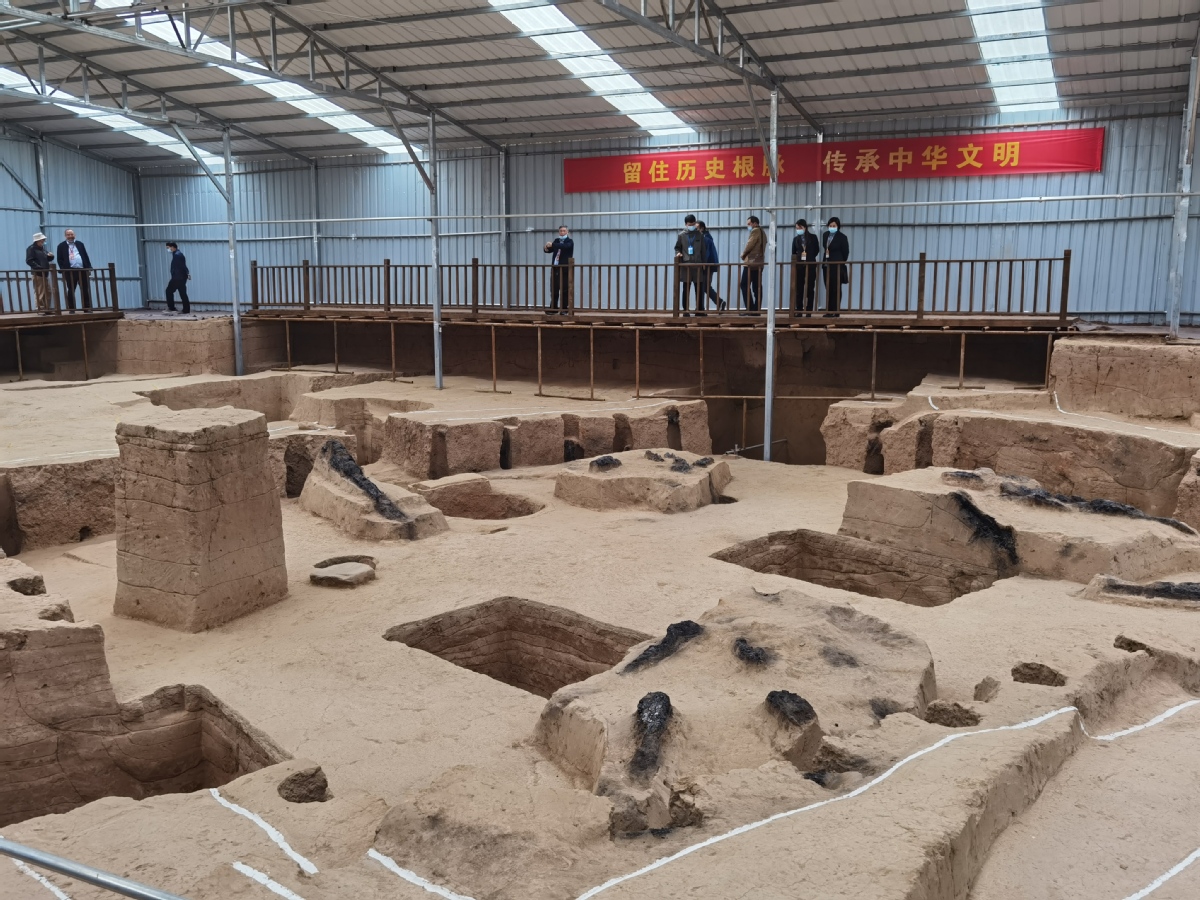
According to Wei, these buildings were probably not used for people's homes, but to host highly important rituals or used as tribal assembly halls.
"The findings are significant for us in reconstructing how prehistoric architecture appeared in China. They also reflect a highly developed society," Wei said.
In Yangshao village, a series of excavations restarted in August after a break of about 40 years. The ongoing fourth excavation in the village is for an academic program aimed at further discovering cultures along the Yellow River.
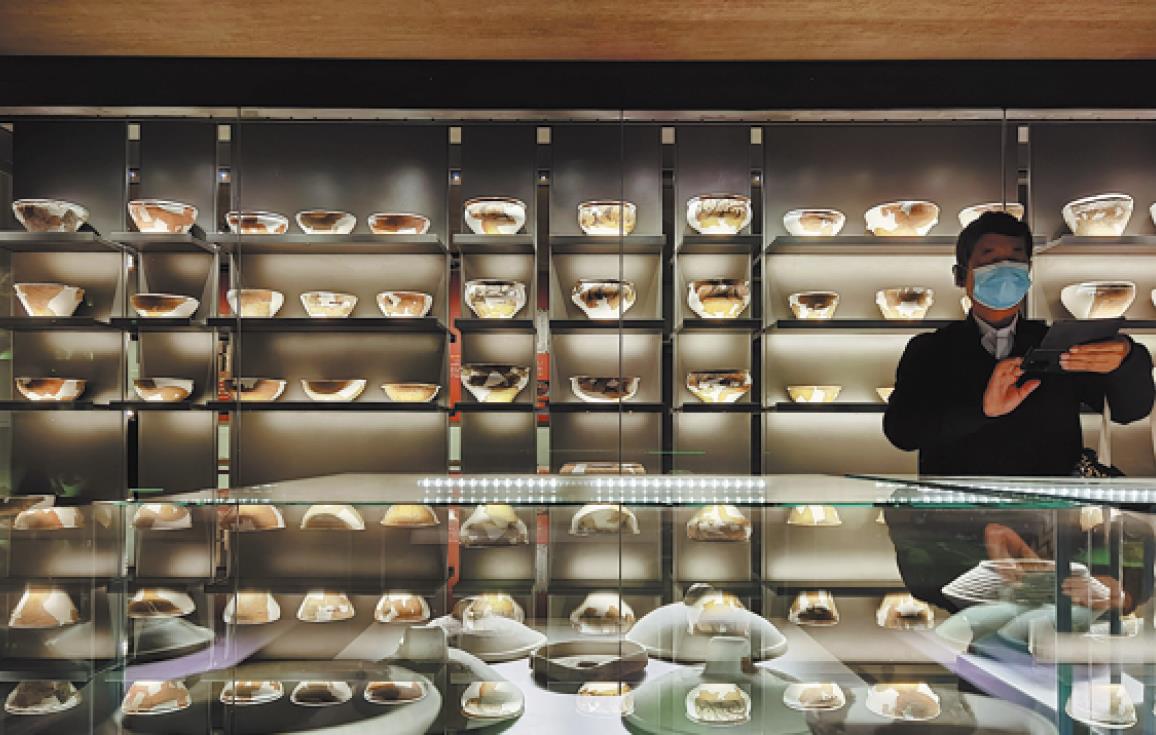
Newly found relics span the entire Yangshao Culture period. In addition to residential compounds, roads and tombs, many artifacts have been found, including pottery, jade and items made from stone, bone, and ivory.
Andersson's team was only equipped with simple digging tools, but Wei and his colleagues are much more fortunate. Thanks to interdisciplinary research, many laboratory findings which could not have been imagined 100 years ago, have begun to surface.
For example, archaeologists took samples of fibroin, an insoluble protein, from unearthed human remains, which showed that the bodies were possibly shrouded in silk. Analysis of earthen blocks taken from the architectural foundations showed they were made from material with components almost the same as those used for modern concrete, Wei said.
Starch granules and yeast were found at the bottom of some pots, providing evidence of alcohol.
Wei said, "The alcohol may have been made from millet, rice and other plants. This offers us direct proof of alcohol consumption in the core area of Yangshao Culture.
"The new excavations have greatly enhanced our understanding of human settlement and evolution of the site. More important, our current research with new technologies is also honoring the centenary of Yangshao studies and the birth of modern archaeology in China."