


Companions in solitude









Living with the pandemic has led a museum curator to reflect on the way ancient Chinese approached the idea of seclusion-to embrace it rather than fight it.
To be alone or together? That question, evocative of the famous one in Shakespeare's Hamlet, was presented by Joseph Scheier-Dolberg to himself on one of those days last year when the curator at The Metropolitan Museum of Art in New York was homebound with his wife and young son, in a city ravaged by the pandemic.
While outings were largely limited to hasty walks to the nearby grocery store, exchanges with family and friends, including those with whom the curator had previously not been in active contact, unexpectedly rose. Sitting in his dimly lit study-bedroom in Manhattan, across the desk from his home-schooling son, he contemplated his own state of being, in the same way an ancient Chinese scholar might have done hundreds of years, or even millennia, ago.
And while ancient Chinese looked for answers deep in the forested mountain or in their own backyard that often amounted to "a simulation of nature" to quote Scheier-Dolberg, the curator, in his own effort, has turned to what those literary-minded men came up with over the ages-ink-soaked pieces of painting, calligraphy and poetry, often three in one.
And now he is sharing his findings with museumgoers through an exhibition titled Companions in Solitude-Reclusion and Communion in Chinese Art, on view at The Metropolitan Museum until next August.
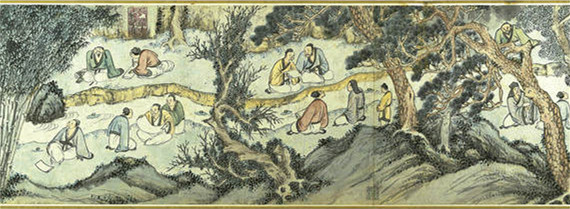
"For more than 2,000 years, reclusion-the act of removing oneself from society-h(huán)as been presented in Chinese culture as an ideal state in which to cultivate the mind and transcend worldly affairs," Scheier-Dolberg says in the exhibition's accompanying wall texts. "At the same time, communion with like-minded people has been celebrated as essential to human experience. Images of people pursuing one path or the other, or combining them in complex and surprising ways, abound."
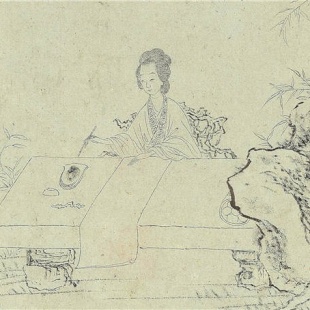
Within those images-about 60 of them are on view-one sees plenty of mountain scenes, although the men that appear in them often seem to stroll rather than scale. The strenuous nature of climbing is replaced by a soothing touch inherent to the genre, one that envelops the figure-usually a scholar-gentleman-as he cruises across the tableau, adding "an extra layer of meaning" to what would otherwise be a landscape painting as seen in the artistic traditions of the West.