


Nation honors top scientists










Wartime ambitions
Gu's ambitions for a career in the aviation industry were rooted in his wartime experiences. In 1930, he was born into an educated family in Suzhou, Jiangsu province, but he moved to Beijing in 1935, when his father was transferred to the city.
In 1937, the July 7 Incident marked the start of Japan's full-scale invasion of China. The sounds of aerial bombardment are deeply rooted in Gu's childhood memories.
"It was then I realized that without aviation, our country would still be vulnerable in the future. I wanted to build aircraft when I grew up," he said.
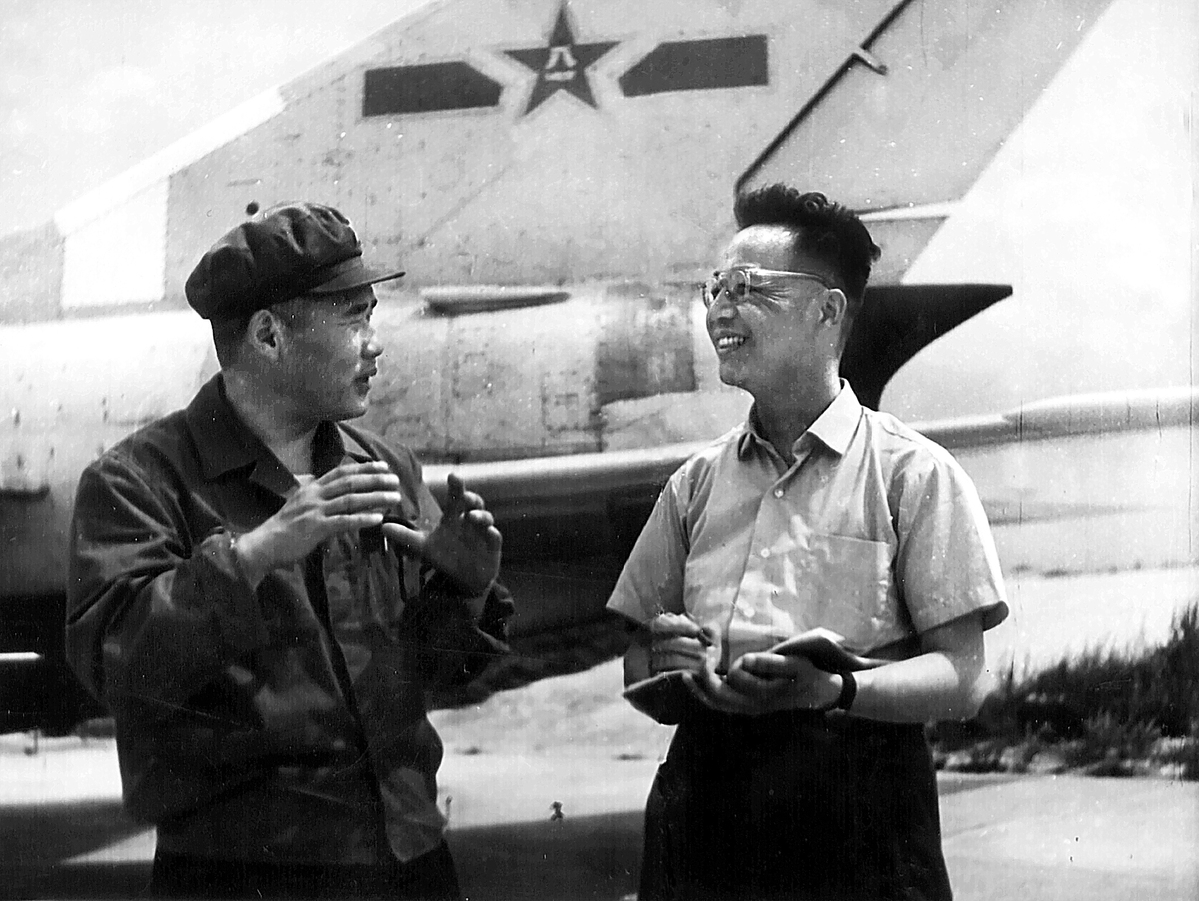
After the Shenyang JJ-1, a trainer jet, Gu worked on the development of the Shenyang J-8.
The plane made its maiden test flight in 1969, but encountered serious vibration problems during subsequent tests.
The pilot described flying it as like being in "a broken bus driving along an uneven road".
To identify the cause of the vibrations, Gu volunteered to observe the aircraft in flight himself.
"We didn't have a camera, so it could only be done by a person," he said. He glued lines of knitting wool to the J-8's rear fuselage and tail wing to observe their flow during flight.
However, Gu had promised his wife that he would not fly again after Huang Zhiqian, his brother-in-law and chief designer of the J-8, died in a 1965 plane crash during a mission overseas.
So, without his wife's knowledge, Gu flew three times to observe the problems with the J-8.
So that he could get a clear view of the way the wool was disturbed, the two planes had to fly just 5 meters apart, posing great risks to Gu and his pilot.
In 1980, a development program for the J-8II was launched, with the second generation of the plane required to provide a much higher level of performance.
Gu was appointed as chief designer, and after just four years, the J-8II's maiden flight took place. The plane was recognized as the most advanced jet fighter used by the People's Liberation Army Air Force at the time.
It served as the Chinese military's main combat aircraft in the 20th century. The model's successful development marked the construction of a complete aviation industry system in China, and Gu was officially hailed as a "master of aircraft design" and "the country's pioneer of aircraft aerodynamic design".
Despite being in his 90s, Gu still shows up in his office at AVIC on work days. He said he gains most enjoyment from following developments in modern aircraft design, and he hopes the younger generation will be able to make great contributions to the nation's aviation industry.





