



'More needs to be achieved' beyond COP26 pact









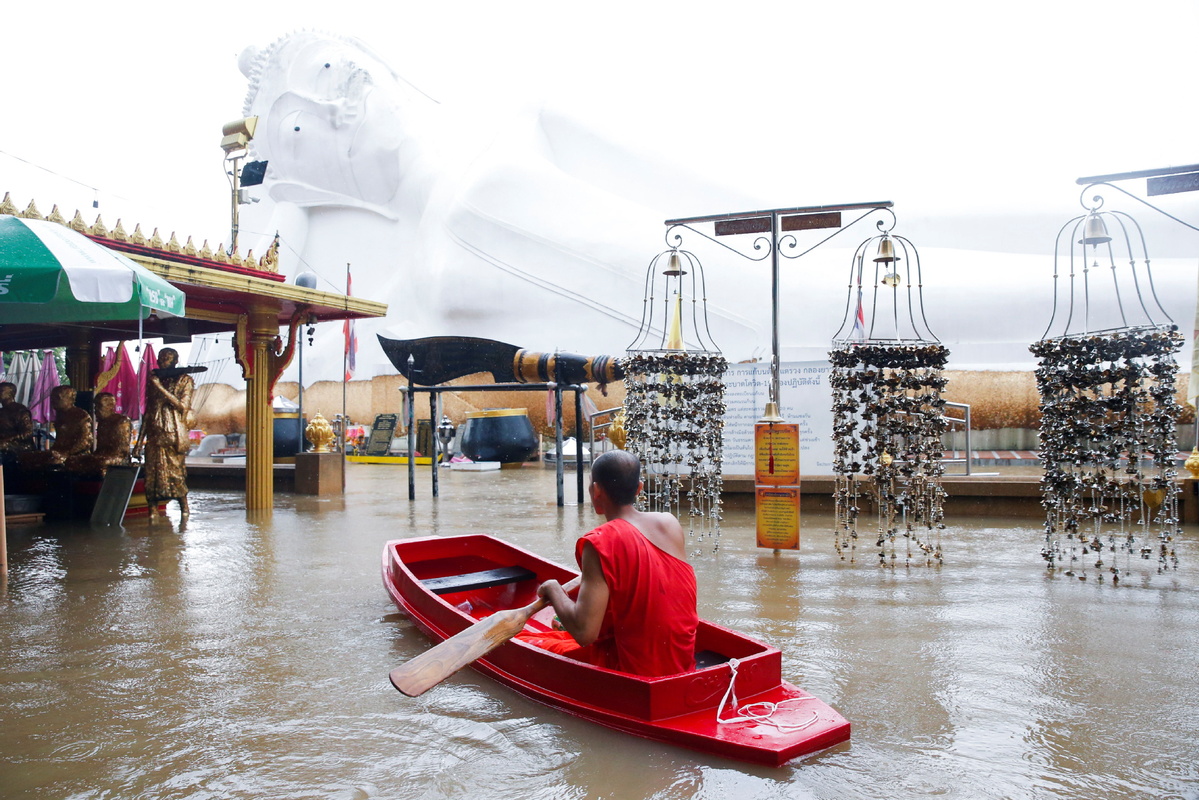
Decisions make 'critical steps forward' but developed world yet to honor pledge
Climate experts say that the Glasgow Climate Pact, signed at COP26 over the weekend, achieved key progress on international global warming policy, but did not go far enough on addressing the impacts of climate change in the developing world.
Negotiators from nearly 200 countries and regions signed on to the pact at the 26th United Nations Conference of the Parties, or COP26, in the Scottish city on Saturday. Reaching a consensus was not guaranteed and was an achievement in itself, and parties reached landmark agreements in a number of areas including deforestation and fossil fuel reduction.
But scientists have pointed out that collective emissions reductions targets, which are known as Nationally Determined Contributions, or NDCs, are not enough to keep global average temperatures to within 2 and 1.5 C this century, a target laid out in the Paris Agreement.
The pact itself recognizes that a gulf remains between what countries have pledged and what is needed to keep Paris goals in sight, and the text urges nations to come back to the table with improved NDCs.
Joeri Rogelj, director of research at the Grantham Institute for Climate Change and the Environment at Imperial College London, said he is "proud, hopeful, and deeply concerned" about the outcome of COP26.
"I'm proud because never before has science featured so strongly in the COP decisions," Rogelj said. "I'm hopeful because many decisions made critical steps forward."
At COP26, negotiators finally agreed on key outstanding aspects of multilateral climate policy, including the finalization of Article 6 of the Paris Agreement, which concerns carbon markets.
"I'm deeply concerned, because climate change is raging and is worsening each year we wait," Rogelj added. "The progress at COP26 was the best the world was willing to do at this stage-kudos to the UK COP26 team-but it is not enough, not by far."
The Glasgow pact is the first to explicitly call for the "phasing down" of unabated coal projects and "inefficient" fossil fuel subsidies this decade. An earlier version of the text, which requested for the "phasing out" of coal, was amended following opposition by developing countries.
Dann Mitchell, a climate science professor at the University of Bristol, said that the pact "is more than we expected, but less than we hoped".
"While it is clearly disappointing that at the 11th hour India challenged the phrase 'phasing out of coal', their entire infrastructure is highly dependent on coal, something the richest countries used to become the global superpowers they are today," Mitchell said. "India's per capita carbon dioxide emissions are an order of magnitude lower than the highest-emitting countries, and clearly India felt that not enough was done to support their transition to green energy."
During COP26, leaders from developing nations had questioned how they could accelerate their low carbon transitions, when rich nations had yet to meet a target of $100 billion in annual climate finance.
This finance is meant to support developing countries adapting to the impacts of climate change, as well as provide "loss and damage" compensations for those impacts that are not preventable. The Glasgow pact expressed "deep regret" that rich nations had missed finance goals and urged them to increase funding.
"With respect to climate justice (COP26) is a failure though, with the $100 billion from the developed countries still not committed and no real financial support for loss and damage," Friederike Otto, a senior lecturer in climate science at Imperial College London, said.
Alyssa Gilbert, director of policy and translation at the Grantham Institute, said that loss and damage was a "bigger and clearer discussion in this COP" than it was at previous conferences, though the issue was "still not addressed head-on".
"This topic will remain essential to developing nations and an international compromise is not clear yet," Gilbert said.










