Crunch time looms for Chinese soccer









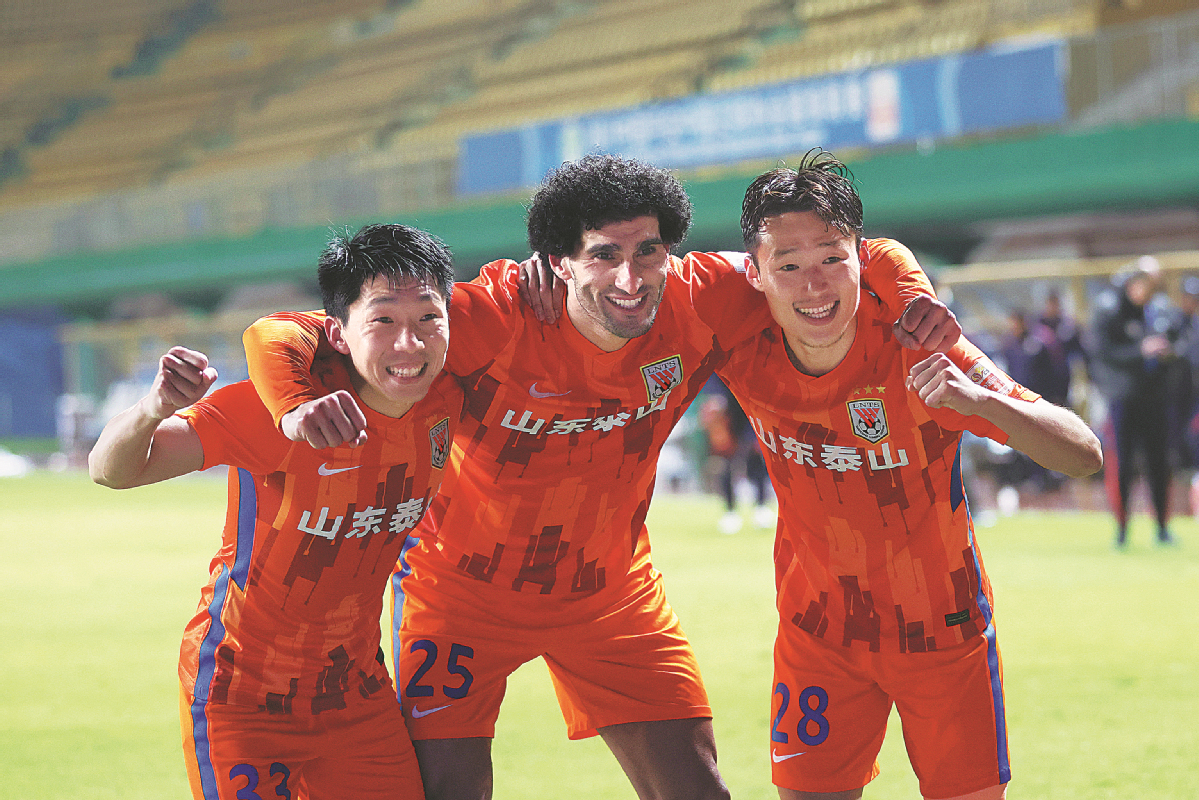
Shandong Taishan won this year's Chinese Super League title on Sunday with three games left to play after defeating Hebei with an easy 2:0 victory. But nearly half of Hebei's players had left the team before the match as they had not been paid for months.
Shandong Taishan is sponsored by a State-owned cultural and tourism group and previously a State-owned electricity group of Shandong province, and Hebei is funded by a private real estate company in Hebei province. They represent the two camps of the Chinese clubs. While the SOE camp remains stable, those funded by private real estate companies are going through life-and-death tests, as the real estate industry in the country has now bid farewell to the high-speed growth it had enjoyed since 2008.
The grave debt crisis of the Evergrande Group, which owes various creditors more than 2 trillion yuan ($314.2 billion) and is the funder of Guangzhou Evergrande, which has won a total of 16 national championships and cups, and been the AFC Champions League winners twice over the past 10 years, has pushed the team to the brink of bankruptcy within months, and all the foreign players on the team have left.
Undoubtedly, Chinese soccer is experiencing its coldest winter this year due to its addiction to hot money from the real estate companies that deemed their huge investment in the clubs good publicity that made it easier for them to buy land from local governments and borrow money from banks.
About half of the 16 CSL clubs might declare bankruptcy after the league wraps up early next month if they cannot find new backers. And the cost is not limited to the clubs. Even if it has six naturalized players, the Chinese national team has only a theoretical possibility now to qualify for the 2022 Qatar FIFA World Cup.
Except for a few SOE-funded clubs, such as Shandong Taishan, Shanghai Port and Beijing Guoan, most professional clubs do not have a sound youth training system thanks to their blind pursuit of quick success by directly buying big-name players. That means the number of capable professional young players in a country with a population of 1.4 billion can be counted in dozens.
The crisis facing Chinese soccer should awaken the football administration that it is high time to put an end to the money-talks model, and focus on youth training and sending more young talents to play in Europe, which Japan and the Republic of Korea have been committed to doing since the 1980s.