Treks bring rewards, but they can be risky










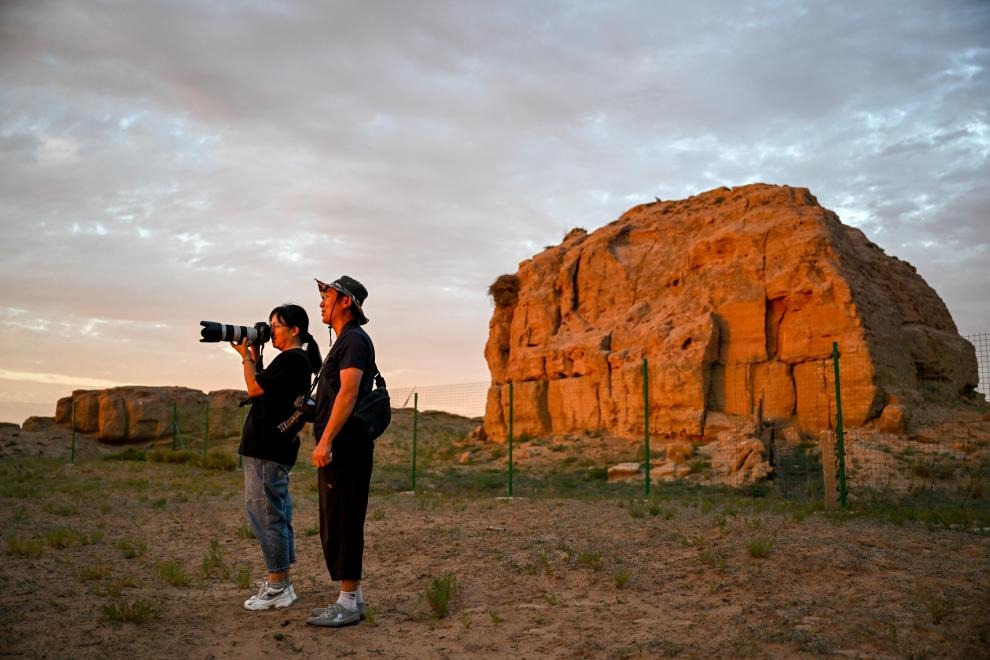
Many people livestream their hiking experiences on various short-video platforms to attract viewers.
However, there are many risks in broadcasting while roaming, so I don't think livestreamers should use dangerous measures to attract an online audience.
In recent years, hiking to an isolated or exotic location has been widely used as a way to attract viewers, and livestreaming en route to Lhasa, capital of the Tibet autonomous region, is a popular way of gaining an audience. In their livestreams, the hosts often say things like, "Live more than a desultory life and open your arms to poetry and distant lands."
Viewers are often attracted by picturesque places like Tibet, which they are probably unable to visit on their own, and they are envious of hosts who can travel without too many concerns.
Attracting large numbers of viewers for their livestreams means hosts can generate revenue via advertisements or user contributions. Some even conduct online sales to increase their incomes. As a quote circulating on the internet says, "Want to get rich? Go hiking!" Despite the glamor, livestreaming while trekking can be a dangerous business.
Walking alone on the high plateau for hundreds of days is a high-risk activity for people without extensive experience of outdoor exercise: they may face altitude sickness, changes in climate and weather, physical discomfort and a lack of supplies.
If they are engaged in livestreaming at the same time and pay more attention to their smartphone screen than the road, their journey will become even more perilous.
In August, a 22-year-old woman from Henan province died when she was run over by her two-wheeled cart while livestreaming her hike to Lhasa.
Local police have warned that many of the carts used by livestreamers have been converted from non-motorized vehicles, so they are not allowed on national highways.
Also, some hosts simply exploit the interest of the audience to make money, but don't walk all the way to their destination. Once they turn off the camera or have to travel uphill, they usually take a car.
To ensure the hosts' safety, some major short-video platforms have introduced rules banning livestreaming while hiking.
Ultimately though, such hosts and viewers who blindly follow the trend should have a sensible view of hiking and take great care.