Picturing art's past









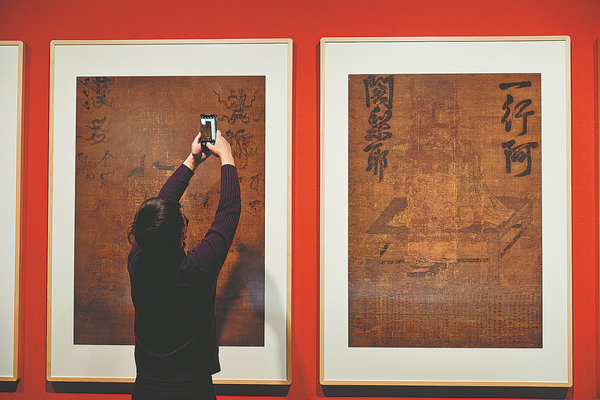
"The breadth and depth of the project will help the public gain a much deeper understanding of traditional Chinese arts through exhibitions like this," says Ying, who is also head of the Zhejiang Art Museum.
"The more people can learn and appreciate traditional Chinese paintings, the more it will help 'bring them to life'," says Ying, echoing China's efforts in recent years to renew its traditions and carry forward its cultural heritage.
The advancement of technology has played a pivotal role in the process. For example, the result of the digitalization and publication project has proved to be a boon to Chinese arts scholars and students, as state-of-the-art digital technology is able to restore every minute detail of the paintings. Instead of relying on the originals, they can now easily turn to these high-quality images for their research.
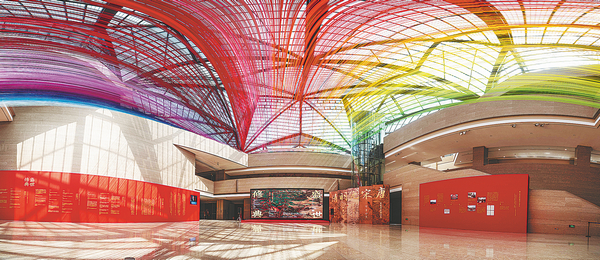
The classic dilemma between preservation and exhibition, as well as application, is perfectly resolved, according to Li Zhirong, a professor at Zhejiang University's School of Art and Archaeology and also deputy director of its Cultural Heritage Research Institute.
"For a long time, we needed to maintain a delicate and difficult balance between conserving cultural relics and putting these treasures on public display or making them available for research," Li explains. "On the one hand, we don't want to cause any permanent damage, but on the other, we would like the public to enjoy them as much as possible."
Using the latest 3D laser scanning, modeling, photogrammetry and printing technology, her team has produced full-scale mobile replicas of some of the stone caves from China's most well-known grottoes, including Dunhuang, Yungang and Longmen, respectively in Gansu, Shanxi and Henan provinces, and brought them to the exhibition.
"You can appreciate the finest details in these reconstructed caves, and you don't even have to travel far," Li says.