Potatoes chip in to restrict desert growth









Favorable conditions
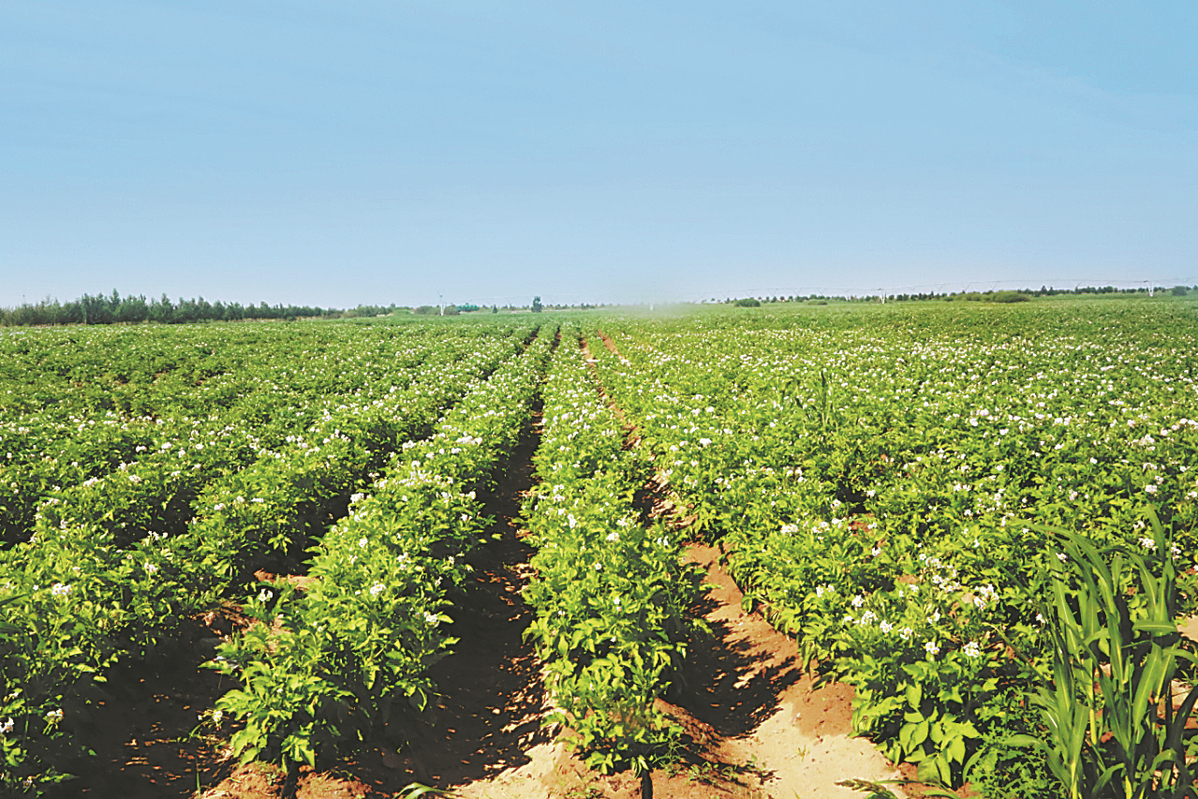
Xu Youdong, head of the Ordos agriculture and animal husbandry bureau, said: "If you look at an aerial photo of Ordos, you will see some huge green circles in the desert. Some people joke that they are 'mysterious' circles left by extraterrestrials, but, in fact, they are our potato fields."
He said the history of potato planting in Ordos can be traced back to 1952. The city's climate and conditions are both conducive to the crop, which has strong tolerance of drought and barren soil.
By 2020, Ordos was home to potato fields covering a total of 13,266 hectares, which produced 300,000 metric tons of the crop a year, according to the city's statistics bureau.
"Potatoes not only bring wealth to local people, but also an oasis. When my kids grow up, they will proudly see the green miracle sparked by their father's efforts," Chen said.
"Some people say nature is cruel and inhumane. They don't understand the truth about nature, which is that it always repays people who really treasure it."
The government of Inner Mongolia has developed many innovative greening solutions to control the sand and set the world an example of how to combat desertification.
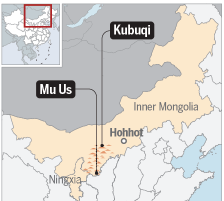
A greening campaign in the Kubuqi Desert has been promoted in the past three decades, led by Elion Resources Group, a local company. It includes measures such as the restoration of vegetation, eco-friendly tourism and a solar power industry.
The campaign-promoting balanced development of the environment, the economy and people's livelihoods-h(huán)as generated income of 500 billion yuan for local people, the regional forestry department said.
About 700,000 hectares of sandy land in the Kubuqi have turned green. The number of wild species has risen from 123 to 530, and water conservation has grown from almost zero to about 25 billion cubic meters, the department said.
Since 2017, Inner Mongolia has treated nearly 4.8 million hectares of desertified land, accounting for more than 40 percent of the area treated nationally during the period.
Meanwhile, grazing has been banned on an area of nearly 27 million hectares, while 18 protected areas of desertified and sandy land have been established, covering more than 183,000 hectares, it added.
Last year, the region's afforestation efforts saw Inner Mongolia's forestry coverage rate and the grassland's vegetation coverage reach 23 percent and 45 percent, respectively, the department said.


- Shanghai airport lays on Spring Festival welcome for world travelers
- China Eastern Airlines announces new Xi'an-Vienna route
- Guangxi villagers perform Spring Ox Dance to welcome spring
- China reports decline in serious crimes, strengthens measures against judicial corruption
- Egrets forage at sunset on Qingdao's Zhangcun River
- Chongqing hosts western China's largest water lantern festival