


Turning back toxic flows of misinformation










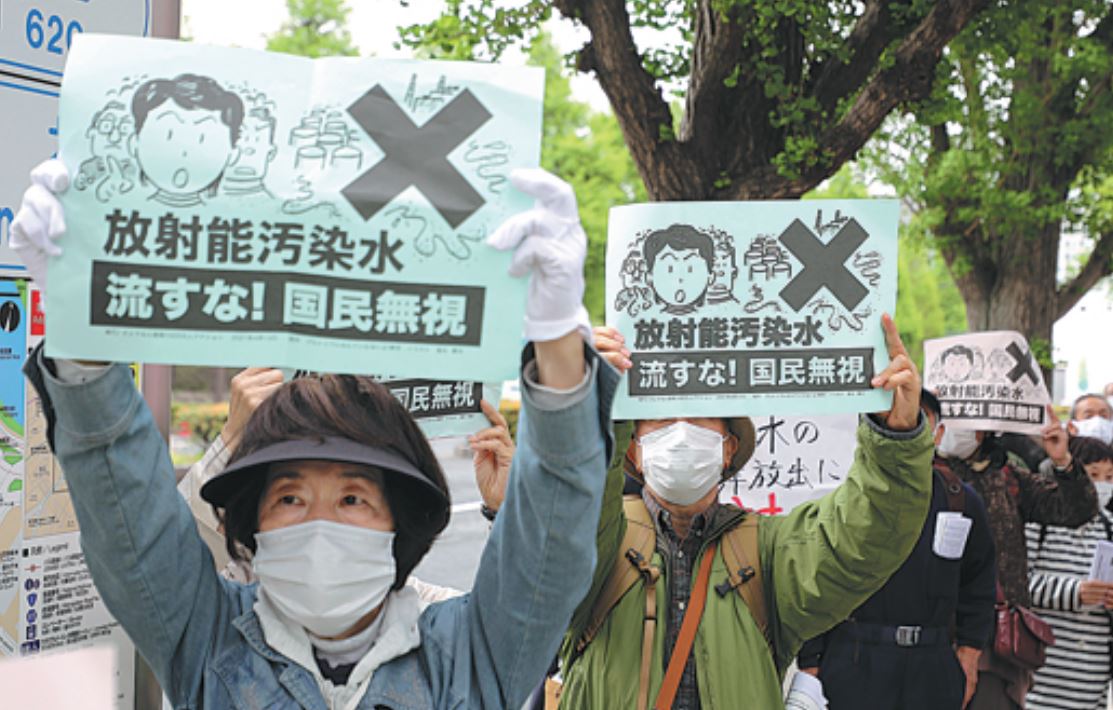
Scathing condemnation
However, many environmental scientists and environmentalists are scathing in their condemnation of Japan's narrative, saying it is misinformation aimed at creating a false impression that the consequences of the 2011 nuclear disaster are short-lived.
A report in 2020 by environmental group Greenpeace says the narrative has been constructed to serve financial and political reasons.
"Long after the Yoshihide Suga (and Shinzo Abe) administrations are historical footnotes, the negative consequences of the Fukushima Daiichi meltdown will remain a present and constant threat-most immediately to the people and environment of Fukushima, but also to the rest of Japan and internationally," says the report, referring to Suga as the then prime minister whose government approved the disposal plan a year ago.
According to the Greenpeace report, there is no technical, engineering or legal barrier to securing storage space for ALPS-treated contaminated water. It is only a matter of political will and the decision is based on expediency-the cheapest option is ocean discharge.
The report also took aim at ALPS, describing it as a flawed technology because of its poor performance and inability to remove Carbon-14, a long term radiological hazard with a half-life of 5,730 years.
The half-life of a reaction is the amount of time needed for a reactant concentration to decrease by half. Its application is used in chemistry and medicine to predict the concentration of a substance over time.
In 2018, Kyodo News claimed in a report that radioactive substances such as Carbon-14, Iodine-129, Ruthenium-106 and Technetium-99 still remained in the treated water piling up in tanks at the Fukushima plant despite the application of the ALPS process. TEPCO had been claiming that ALPS can remove all toxins except tritium.
As a result of the Kyodo report, 72 percent of the water in the storage tanks was required to be processed again but questions remain over how effective that will be.
Kenichi Oshima, a professor in policy science at Ryukoku University in Kyoto, says another claim that amounts to a false narrative is TEPCO's statement that it plans to decommission the Fukushima reactor in 30 years.
"Their logic is, in order to decommission the reactors in 30 years, they have to discharge the water now. This is totally unacceptable because the goal itself is a mission impossible," Oshima says. "Building on this false assumption, all the process behind it will be problematic.
"The Japanese government has a duty to let people know about the fact of the Fukushima Daiichi nuclear power plant but they failed to do so and they covered up the truth."





