



Minnan's beautiful red brick art revived









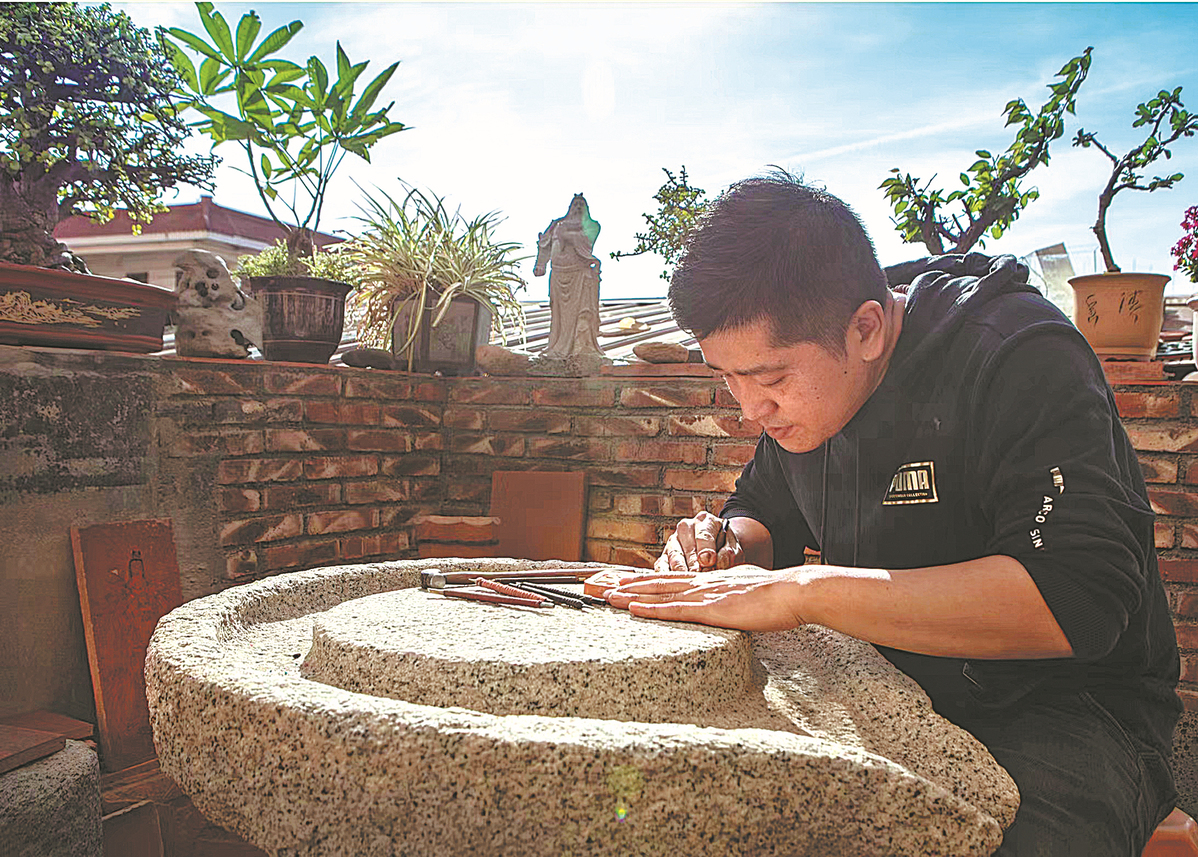
"No building comes without carvings, and carvings make buildings more precious," goes an old saying in Minnan, an area in southern Fujian province.
The saying refers to brick carvings, which were an important feature of the old red brick buildings in the area.
The carvings, which were once commonly found on either side of the main entrance of Minnan's buildings, embellished the facade and were displays of the aesthetic taste and cultural temperament of their original owners.
Wu Jiandong said he became worried when he discovered that the tradition was on the verge of disappearing, a downward trend that has been underway for decades.
With development, the number of ancient red brick buildings has decreased, and Minnan's carvings have gradually faded from sight, the young master brick carver from Fujian's Quanzhou city said.
The 42-year-old has learned the traditional technique and now combines it with modern tastes to develop his own unique style of brick carving.
Wu said that he hoped to be able to help the traditional craft continue through innovation and by diversifying appeal.
"Market demands have changed in recent years, and so has our thinking," he told China Daily by phone. "The demand for ancient houses has decreased so, we must add modern elements and combine traditional and modern life to help pass down and develop traditional crafts."
People in Minnan love tea, so he created a series of carved brick tea decorations, including tea plates, cup holders, pot holders and other items. They have been warmly received by local residents and foreign visitors.
In addition to plates, Wu also designed carved pot holders, joss stick stands, paperweights and other ornaments.
Earlier this year, a pendant decorated with a swallow tail ridge and a bright moon was purchased by an overseas Chinese man from the Philippines. The customer told Wu that he would hang the pendant in his office as a reminder of the architecture and the moon of his hometown.
This year, he also created a special brick sculpture called Yanping Strength to commemorate the 360th anniversary of Zheng Chenggong's recovery of Taiwan island. The special carving has been admired by many experts and local residents.
Wu said the market's recognition of his work has given him more confidence that he will be able to pass down his craft and further develop his pieces, and the current popularity of short videos has also given him new hopes of promoting Minnan brick carvings.
To this end, he has designed a DIY brick carving experience box called Wei Yu Huan Xi (or "Only You are Happy"), which includes an instructional video on the art.
"I hope that more young people will make their own pieces with the knife and red brick contained in the box, and enjoy a sense of creative achievement through my video," he said.
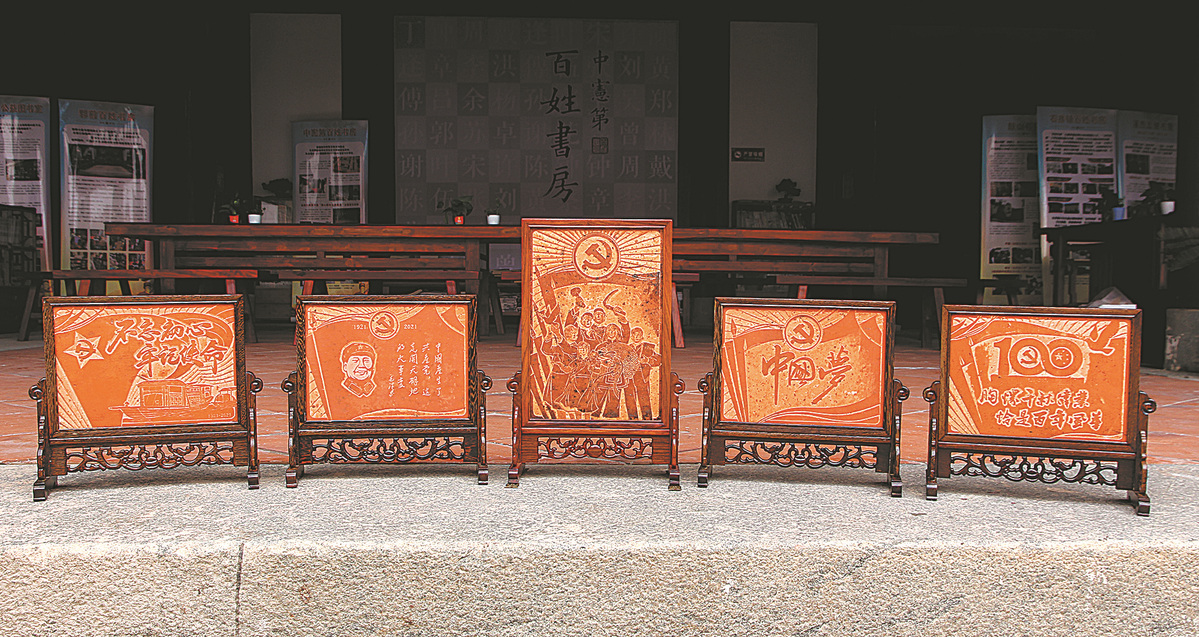
When Wu was a child, he developed a fondness for Minnan's red bricks and was deeply interested in traditional arts and crafts. As he grew older, he was even more fascinated by the carefully carved bricks, tiles, trees and stones he found among the ancient Minnan-style red brick buildings all over Quanzhou.
Whenever he has time, Wu still visits villages to look at old houses, chat with elderly master brick carvers, learn new methods and skills and collect materials to help him develop his own style.
"Brick carving is easy to learn, but difficult to master," Wu said, adding that the art form is rather like calligraphy. "Everyone can write, but only a small number of people can become calligraphers."
He said that he has never regretted his choice to become a brick carver, and that he hopes to pass on and carry forward traditional arts and crafts through his efforts.
Wu also works on the reproduction and preservation of existing carvings on ancient buildings.
"As I repair the flaws in the old carvings, I help bring out the essence and beauty for all to see. This is also my way of protecting them," he said.
Zheng Wanli, director of ishijing.com, said that Wu is an honest and persistent person, and has developed an innate sense of art.
"Tea sets have become works of art in his hands," Zheng said. "He has carved Minnan culture into those bricks."
Since the 1980s, Wu has worked to reintegrate brick carvings with daily life and narrowed the distance between the tradition and the public, allowing everyone to have a chance to understand and pass on the traditional Minnan art and craft, Zheng added.
The art form originated during the Song Dynasty (960-1279) and flourished during the Ming (1368-1644) and Qing (1644-1911) dynasties. It is now an important part of national intangible cultural heritage.
Red bricks were only used in Minnan during the dynastic period, and for thousands of years, the area's classical and elegant red brick carvings not only gave Minnan a unique and memorable identity, they also become symbols of homesickness for those who left.
Yang Jie contributed to this story.


- Beijing intellectual property court highlights landmark cases to bolster tech innovation
- Traditional earthen buildings revitalized through boutique hospitality, culture
- Shanghai's first Yangtze-crossing rail transit line completes track laying
- China-Laos mega power project put into operation
- China-Vietnam carbon markets explored in new academic work
- UIBE School of International Relations marks 20th anniversary with global governance forum





