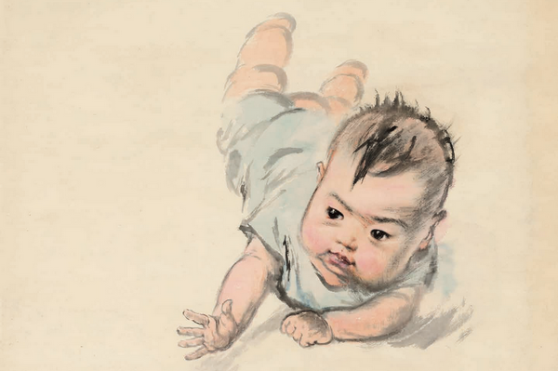
For autumn, the harvest season, paintings vividly reflect ancient people's daily life revealing vitality, while the winter section creates a solemn atmosphere through portraits of emperors, politicians, generals and other famous historical figures.
The calendar design exquisitely reflects Chinese aesthetics as different aromas are used in printing the paintings: rose flavor for spring, jasmine for summer, apple for autumn to mean "harvest", and, finally, sandalwood for winter.
"But when you view the portraits and better know the figures' stories, you may find various 'flavors' from one character," says Ma Shunping, another Palace Museum researcher and co-author of the book.
From 1933 to 1937, the Palace Museum published its calendars until it was halted by war. The tradition was resumed in 2009. Its popularity made the publishing of calendars a favorite routine for the museum. In the past 12 years, the 12 animals of the Chinese zodiac were chosen as themes for the publishing. Each year's edition mainly featured one animal in that zodiac, introducing cultural relics related to that animal on its pages.
Du Haijiang, deputy director of the Palace Museum, explains that the new calendar featuring figure paintings is thus a creative format to bring the rarely seen relics to more people. To protect paperwork relics, once a painting is exhibited at the Palace Museum, it has to "sleep" in the warehouse for at least three years.
Among the paintings presented in the calendar, there are many household titles like a Song Dynasty (960-1279) facsimile of Goddess of Luo River, one of the best recognized Chinese figure paintings in history. There are also works by monumental artists, including Tang Yin and Qiu Ying from the Ming Dynasty (1368-1644), Song Dynasty emperor and painter Zhao Ji, and Li Gonglin, also from Song period.
New technologies are also used in a tacit way. Augmented reality is deployed for the calendar, enabling readers to view some animated paintings by scanning QR codes. Elaborate audio guides to the paintings, narrated by four researchers from the museum who wrote the book, are also hidden in those QR codes.
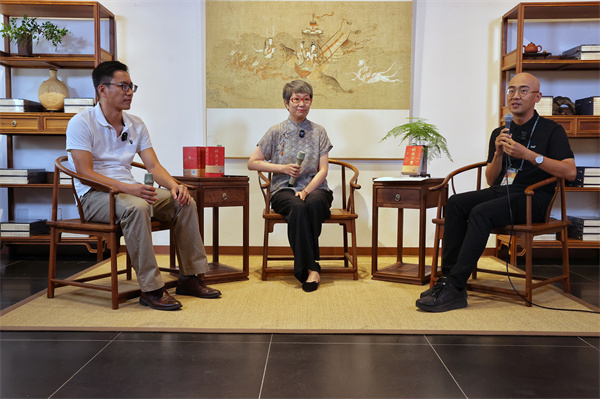
The Sunday lecture at the Palace Museum, which was also livestreamed online, is also the beginning of a 10-installment series promoting traditional culture about the Forbidden City.