



Europe's economic woes to bring big changes









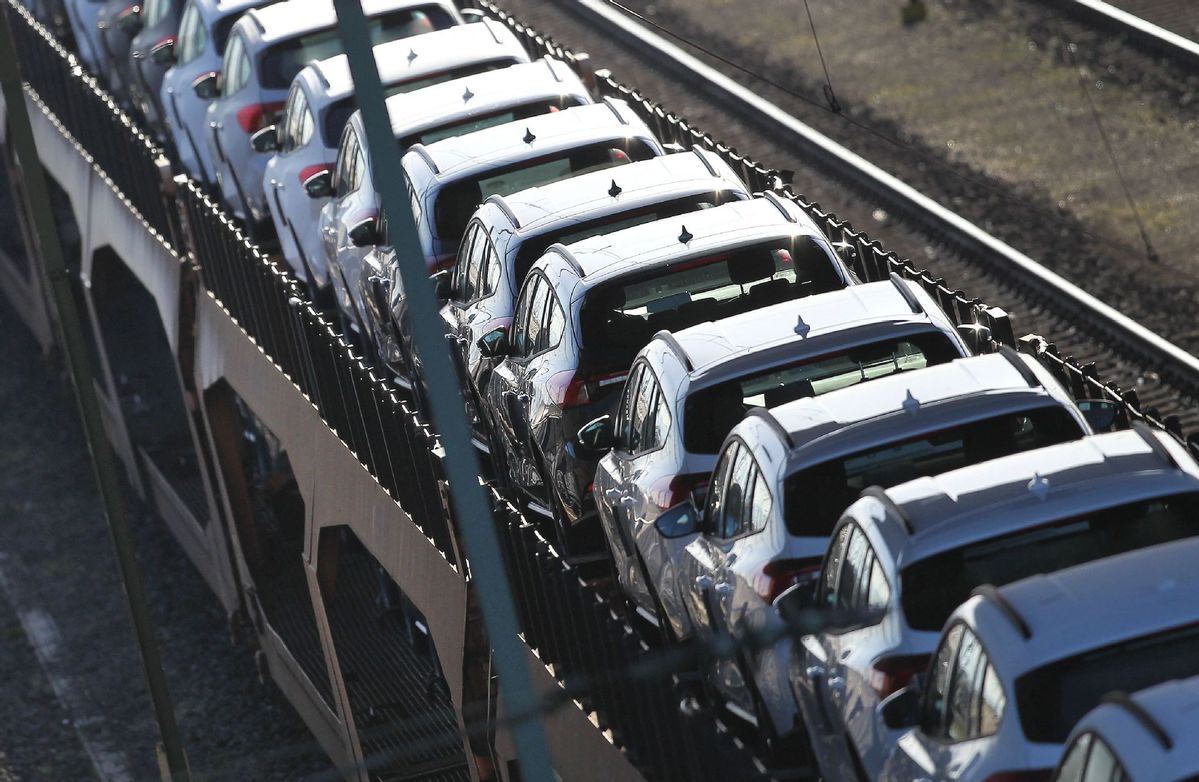
Germany's economy may slip into recession this winter, as its inflation rate is expected to reach above 10 percent in the fall, according to the monthly report issued by the Deutsche Bundesbank, Germany's central bank, on Aug 22.
This comes after Germany in May recorded its first foreign trade deficit in more than three decades, pointing to structural challenges and a grim outlook for its economy.
Germany is the engine of European economic development, and its weakening growth is bound to drag down the whole European economy. After experiencing the hottest, driest summer in decades, Europe is now turning to autumn and then winter. Sharp increases in energy prices due to the influence of the Russia-Ukraine conflict may make this winter particularly difficult for Europe, but the economic woes may be more difficult and last longer.
The proximate cause of Europe's economic woes is the "energy transformation". As European countries are cutting off their energy supply systems from Russia and turning to the United States and the Middle East for oil and gas at higher prices, European industries' development will be constrained by low energy supplies and high costs for a long time.
Germany is the center of European industry, and its foreign trade deficit shows that the international competitiveness of European industry is declining sharply.
The prospect of Europe's economic recession will bring big changes to the continent.
First, for Europeans who have been accustomed to keeping indoor temperatures above 25 C in winter, it is already a challenge to keep the temperature down to the government-recommended 17 C, and this is especially true for low-income households, which face rising electricity prices and the pressure of inflation.
Second, a growing number of countries in Europe are likely to experience political unrest as a result of the psychosocial changes of the public. British Prime Minister Boris Johnson is stepping down, Italian Prime Minister Mario Draghi resigned, German Chancellor Olaf Scholz's support rating has dropped to only 25 percent recently, and French President Macron's support rating is also not optimistic at the moment. In Europe, the change of government leaders may not be a big deal. The problem is that those who take over may not be able to reverse the trend of sluggish economic growth and deepening social tensions.
Third, under economic and social pressures, European countries will inevitably be weaker in their willingness to pursue ambitious goals such as promoting European integration, addressing climate change and leading global governance.
The fundamental reason why Europe is in today's decline is that it did not build an independent European defense system after World War II, and its freedom of political choice is greatly restricted.
In 2002, the European Union-Russia Energy Dialogue was set up in the joint statement of the EU-Russia summit, establishing a comprehensive economic cooperation framework based on energy cooperation. In 2013, the EU and Russia reached a principled consensus on building an "integrated market". However, this form of peaceful coexistence and common development of EU-Russia relations was broken by the Crimean crisis in 2014. The leaders of Germany and France at that time actively facilitated the signing of the 2015 Minsk peace agreement between Ukraine and Russia, which continued the general stability of the European region for another eight years, until this year's breakout of the Russia-Ukraine conflict.
Looking back at this process, it may not be hard to judge whether the United States played a destructive or constructive role in Europe. For Europe, to get out of this decline, it must strengthen its real strategic autonomy and abandon the "Cold War mentality" characterized by exclusivity and confrontation. It will be difficult to get out of the predicament without a change of thinking.
The author is deputy director of the Institute of Russian, Eastern European and Central Asian Studies at the Chinese Academy of Social Sciences.










