Early civilization unveiled










A bigger picture
With an area of about 700 sq km, Liyang Plain boasts more than 700 prehistoric sites, including Jijiaocheng and Chengtoushan, which are separated by a distance of just 13 km.
Archaeologists believe that communities and individuals from the two sites were in some form of basic communication, but more evidence is needed to see how far this had developed.
With mountains on three sides, the east of Liyang Plain faces Dongting Lake, China's second-largest freshwater lake.
Guo says that the plain attracted settlers between 10,000 and 4,000 years ago, because of its location and good environment, which is suitable for growing crops, and ample resources.
"From the Paleolithic Age to Neolithic Age, Liyang Plain saw a continuous development, nurturing early human civilization," Guo says.
Experts also believe that the two places had cultural communications with the nearby Shijiahe site in Tianmen, Hubei province.
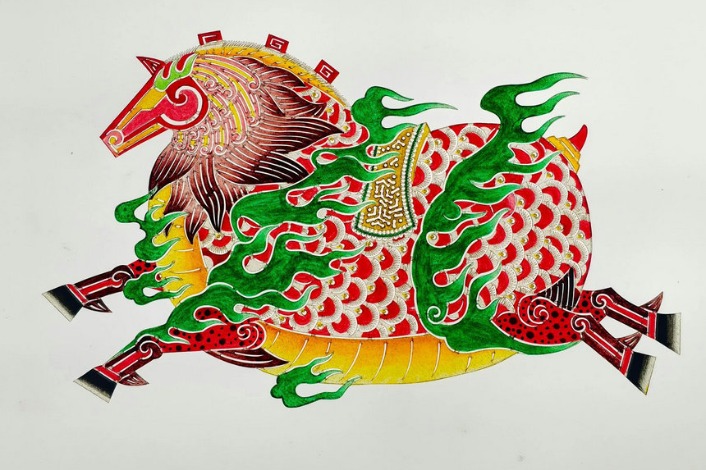
At Chengtoushan, animal-shaped pottery, similar to that in Shijiahe, was unearthed.
"There were many settlement clusters along the middle reaches of the Yangtze River at that time, but we have no idea whether they were a loose alliance or under the rule of one city," he says.
Guo believes it's important to bring the Jijiaocheng site "to life "to promote ancient culture among the public and boost the local economy.
He suggests that the authorities make a comprehensive arrangement regarding the Liyang Plain, including Jijiaocheng, to combine the area with rural revitalization and tourism development efforts.
A national research program was established in 2002 to trace the origins of Chinese civilization.
The project's significance, Guo says, is that experts were able to set China's own standards to define a civilized city, such as social division of labor.
"Chinese civilization is about being inclusive, seeking common ground while reserving differences and pursuing harmony without uniformity," Guo says.
"Through a dynamic process, different cultures of China have been interacting with each other, forming the diverse but integrated Chinese civilization."
He says at Jijiaocheng and Chengtoushan, the ancients planted the seeds and irrigated the paddy fields, proving that Chinese civilization is an agricultural one that is deeply rooted in the soil. It's unlike Western civilization, he says, which is based on oceans and trade.
Feng Zhiwei contributed to this story.