Chinese NEVs expected to zoom in 2023









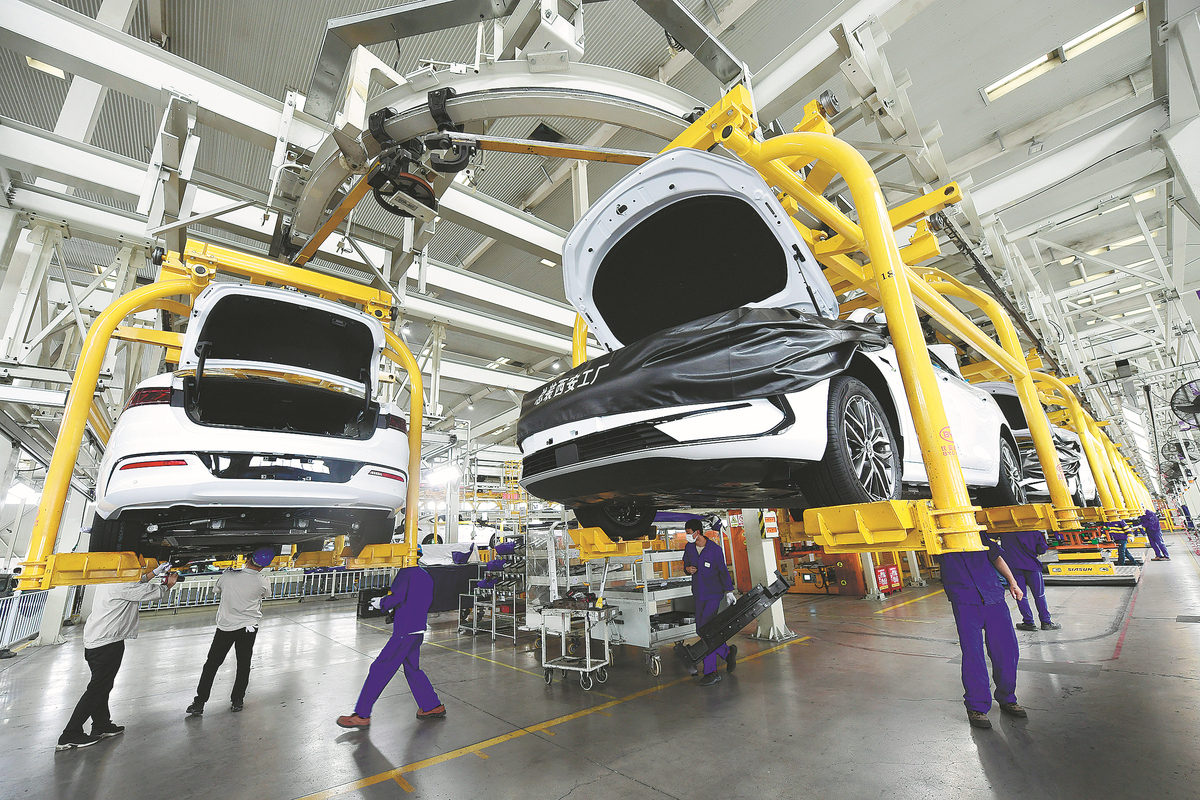
Manufacturers see order rise in private buyers both domestically and globally
China's new energy vehicle market, already the largest in the world, is expected to grow further in 2023 as vehicle makers are vying to launch new models and private car buyers are becoming the major consumer group.
Sales of electric cars and plug-in hybrids, both classified as NEVs in China, reached 6.07 million units in the first 11 months of 2022, according to statistics from the China Association of Automobile Manufacturers.
The CAAM estimated the figure would have reached 6.7 million units for the whole year, up from 3.5 million units in 2021 and accounting for 25 percent of China's estimated vehicle sales for the year.
China's national NEV plan, which was released in November 2020, is expected to hit the 25 percent target in 2025.
"We are three years ahead of our goal," said Wu Zhixin, vice-president of the China Automotive Technology and Research Center, at an industry forum in late December. He expected NEV sales to grow further to 9 million units in 2023.
He said the prospects are the result of a combination of factors, including the "unexpectedly high "growth rate in 2022, favorable policies for NEV drivers as they are exempt from the weekly ban days for gasoline cars and a wider choice of available models.
Statistics from China EV 100, a major NEV think tank, showed that in the first half of 2022, carmakers in China launched 33 passenger NEV models, accounting for 60 percent of all passenger vehicles launched in the same period.
There were around 300 NEV models available in the market by the end of the first half, roughly one-third of all available models in the segment. Of NEV buyers in the first half, 78 percent were private buyers.
Guan Mingyu, a McKinsey partner, said: "Triggered by Chinese car buyers' affection for smart EVs, the Chinese vehicle market is experiencing a series of changes far bigger and wider than expected.
"The surge of electric vehicle sales in China is powered by buyers' actual demand instead of government policies."
China rolled out subsidies for NEV buyers in 2009. As NEVs are becoming a serious choice for car buyers, authorities had cut the subsidies in the past few years and decided to stop them altogether by the end of 2022.
William Li, chairman and CEO of China's leading electric car startup Nio, said some car buyers placed orders in 2022 to be eligible for the subsidies, so the first few months of 2023 are not likely to see a sales surge.
But Li said he is confident about the full-year prospects for the sector. Li expects his company to outsell Toyota's premium Lexus brand in China in the new year.
Lexus is one of the most popular premium car brands in China, coming after German giants BMW, Mercedes and Audi.
"I am confident that we can beat Lexus in sales in 2023, although we will definitely be behind BMW, Mercedes and Audi," said Li.
Lexus sold 168,644 units in the first 11 months of 2022, down 16.45 percent year-on-year. Qin Lihong, Nio's president, estimates that Lexus' sales in China may reach around 200,000 units this year.
That would mean Nio, which sold over 120,000 vehicles in 2022, will see its sales at least double in 2023 if it is to outsell Lexus.
Nio is likely to win, as NEV buyers tend to choose local Chinese marques. Bill Peng, a McKinsey partner, said brands are not as important to electric car buyers as they are to people purchasing gasoline cars.
Statistics from the China Passenger Car Association show that 12 out of China's top 15 NEV makers in the first 11 months of 2022 were Chinese. The three exceptions were Tesla and Volkswagen's two Chinese joint ventures.
Warren Buffett-backed Chinese maker BYD stopped production and sales of conventional gasoline cars in early 2022, becoming the first traditional carmaker to focus on NEVs.
Its sales in the first half of 2022 hit 640,000 units, exceeding its full-year sales in 2021 and overtaking the United States-based Tesla as the top NEV seller in the world.