



China enters new phase of COVID response









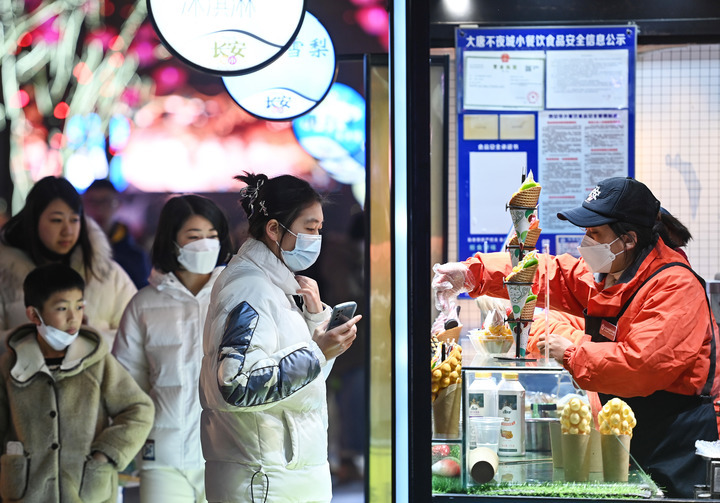
BEIJING -- From Sunday, China starts managing COVID-19 with measures designed for combating Class B infectious diseases, instead of Class A infectious diseases.
In recent months, the country has made an array of active adjustments in its COVID response, ranging from 20 measures in November, 10 new measures in December, changing the Chinese term for COVID-19 from "novel coronavirus pneumonia" to "novel coronavirus infection," and downgrading COVID-19 management measures.
Confronted with epidemic uncertainties, China has always been putting people's lives and health first, adapting its COVID response in light of the evolving situation. These efforts have bought precious time for a smooth transition in its COVID response.
Science-based decision making
The year 2022 saw the rapid spread of the highly-contagious Omicron variant.
The fast-changing features of the virus and the complicated evolution of epidemic response posed serious challenges for China's decision-makers, who have been closely following the epidemic situation and putting the people's lives and health first.
Twenty adjusted measures were announced as early as November 2022. They included the measure to adjust the categories of COVID-19 risk areas from high, medium, and low, to only high and low, in order to minimize the number of people under quarantine or requiring health monitoring. The circuit breaker mechanism for inbound flights was also canceled.
The adjustment was made based on a scientific evaluation of the Omicron variant which showed that the virus had become less deadly, and the social cost of sustaining the prevailing epidemic control which had rapidly increased.
Meanwhile, task forces were dispatched nationwide to supervise epidemic response and assess local situations, and meetings were held to solicit suggestions from leading medical experts and community epidemic control workers.
On Dec 7, China released a circular on further optimizing its COVID-19 response, announcing 10 new prevention and control measures to ease restrictions on visits to public venues and travel, and to reduce the scope and frequency of mass nucleic acid testing.
The annual Central Economic Work Conference, held in Beijing in mid-December, demanded efforts to optimize epidemic response based on the prevailing situation and with focus on the elderly and those with underlying diseases.
Under such guiding principles, various sectors of the country, from hospitals to factories, have been mobilized to support continuous adjustment of epidemic control.
Considering factors including the development of the epidemic, the increase in vaccination levels, and extensive epidemic prevention experience, the country entered a new phase of COVID response.
Against such a backdrop, in late December, the National Health Commission (NHC) made the announcement to downgrade the management of COVID-19 and remove it from infectious disease management requiring quarantine as of Jan. 8, 2023.
"When an infectious disease poses less harm to people's health and leaves a lighter impact on the economy and the society, it is a science-based decision to adjust the intensity of prevention and control measures," said Liang Wannian, head of the COVID-19 response expert panel under the NHC.
Science-based, timely and necessary adjustments
After fighting Omicron for nearly a whole year, China has gained a profound understanding of this variant.
The treatment and control experience of the variant in multiple Chinese cities and foreign countries revealed that the great majority of patients infected with the Omicron variant had showed either no symptoms or mild symptoms -- with a very small proportion developing into severe cases.
Compared with the original strain and other variants, the Omicron strains are becoming milder in terms of pathogenicity, and the impact of the virus is changing into something more like a seasonal infectious disease.
The continued study of the development of the virus has been an important precondition for China's optimization of its control protocols, but it is not the only reason.
To safeguard people's lives and health to the greatest extent, China has been closely monitoring the threat of the virus, the immune level of the general public and the capacity of the health care system, as well as the public health intervention measures.
Efforts have been made on all fronts. By early November 2022, more than 90 percent of the population had been fully vaccinated. Meanwhile, the country had facilitated the development of drugs via various approaches, with many drugs and therapies introduced into the diagnosis and treatment protocols.
The unique strengths of Traditional Chinese Medicine are also being leveraged to prevent severe cases.
In addition, several other drugs targeting COVID infection are being developed, covering all three technical approaches, including blocking virus entry into cells, inhibiting virus replication, and modulating the body's immune system.


- New policies, measures bring reassurance to Taiwan youth
- Remains of 12 Chinese martyrs in Korean War returned to homeland from ROK
- Remains of the 13th batch of CPV martyrs set to return to China
- China steps up efforts in field observation to protect grassland ecology
- China advances flood control, disaster relief efforts in key southern regions
- Chinese engineers plan to study building greenhouse on lunar surface





