


1,800-year-old documents provide intriguing insight into governance









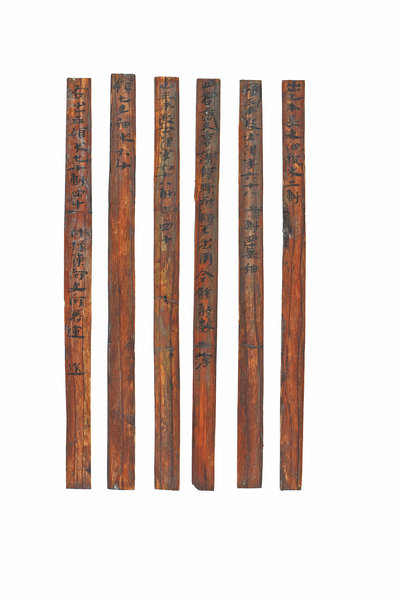
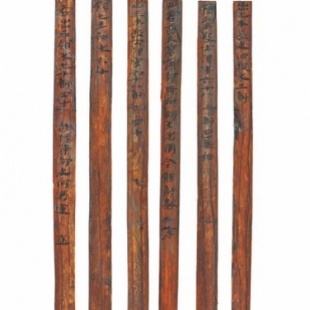
From house ruins and abandoned wells in Chenzhou, Hunan province, archaeologists recently unearthed a find of nearly 10,000 wooden slips used for recording various items from 1,800 years ago.
They helped to portray a detailed picture of social life during an era which was full of conflict as well as being a time of legends.
Dutou ancient city ruins in Linwu county, Chenzhou, yielded key findings on the past of a county with a rich history, according to last week's media conference by the National Cultural Heritage Administration in Beijing.
Historical recordings showed that the site was the center of an eponymous county from the Han Dynasty (206 BC to AD 220) through to the 6th century. This was supported by around 400 tombs found in the region from this period.
Excavations in 2022 and 2023 focused on an area that was believed to be the county government. This in turn led to the discovery of the wooden slips, says Chen Bin, a researcher with the Hunan Provincial Institute of Cultural Relics and Archaeology. Most of the unearthed pieces were official documents.
The slips, known in Chinese as jiandu, were a primary method of documentation in China before paper became widely used.
Year markings on the slips indicated they were from the Wu Dynasty (222 to 280). Wu, with its capital in present-day Nanjing, Jiangsu province, for most of its time, once ruled a vast territory in East and South China.
In spite of its relatively short era, one of the trilateral powers in China from the last years of the Han Dynasty to the Three Kingdom period (220-280), its stories and folklore became familiar to the public due to the iconic novel Romance of the Three Kingdoms.
The new findings compose the largest-scale discovery of Wu slips in history.
"We got a lot of material from these documents that enhances our understanding of administrative divisions, taxation, farming and the mining industry," Chen says.