


A Neolithic site in Jiangsu tells new stories










A highlight of the artifacts is a ritual object made of three parts — a stone yue axe, a bone ornament on its top and an ivory decoration at its base. It's believed there was likely a handle connecting the three that hasn't been found.
Similar artifacts have been found in the Archaeological Ruins of Liangzhu City, a UNESCO World Heritage Site in Hangzhou, Zhejiang province, but the one from Sanxingcun is even older, says Institute of Archaeology researcher Li Xinwei.
"It seems the regard for the yue axe as a symbol of power and the custom of decorating it persisted, and the oldest specimen to date comes from this site," says Li Xinwei.
Consequently, this excavation may enhance understanding of the lineage of ancient cultures in the Yangtze River's lower reaches, says Li Moran.

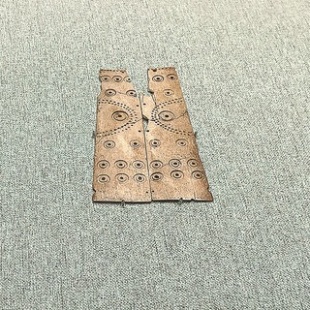
Four carved bone boards, which had never been found in China before, were discovered in a tomb on the site. The grave belonged to a young female, who's thought to have been the leader, since her tomb seemed to convey the most status among those on the site from that time. Another 15 funerary objects, including bone hair clasps and spoons, and jade artifacts, were discovered inside. The find suggests a matriarchal society with a female leader.
The boards adorned with concentric circles and dotted lines were found on the left side of her chest. These two patterns are typical of the Neolithic, Hebei Normal University archaeology professor Tang Huisheng says.
There are different theories as to their functions. Some scholars believe they were used to make records, while others believe they may have served religious or magical purposes.
Most of the human bones found at Sanxingcun were well-preserved.
"They're hard and solid, whereas most human bones found in the Yangtze's lower reaches from this time aren't," Li Moran says.
"This fills in some gaps in the samples between China's north and south during the Neolithic."