


It was found lying on top of the skeleton, rather than next to it, with its trapezoid-shaped head resting on the dead man's shoulder. Archaeologists suggest that at the time of burial, the man may have held the dragon in his right arm, with his right hand holding a bronze bell, which, upon excavation, was lying on the middle section of the creature. The bell contains a jade tongue of a striker.
"Imagine this man, most probably a sorcerer, dancing with the dragon during the performance of his rituals," Guo says. And he must have been accompanied by the chimes produced by jade colliding with bronze, a resonant blend of two distinct qualities.
By that time jade ware had been made continually in China for more than 5,000 years. And it may not be mere coincidence that northeastern China, home to the aforementioned granite stone dragon, has also yielded some of the oldest jade dragons found in the country.
These jade dragons, dating to 3500 BC, fall largely into two categories, Guo says.
One, commonly referred to as the pig dragon, is noted for the creature's wrinkled snout, pricked ear and rounded body, all pointing to a possible connection with a boar, or, as some other scholars have suggested, a bear, which at the time was probably worshiped by people living in the region.
The other, known as the C-shaped dragon, was characterized by an elongated snout, an extremely streamlined body and flowing mane, which collectively imbued it with a dynamism and gracefulness, and made it appear to be ahead of its time.
"The mane could as well be deer horns," says Guo, who worked for nearly 40 years on the sites that yielded the two types of dragons.
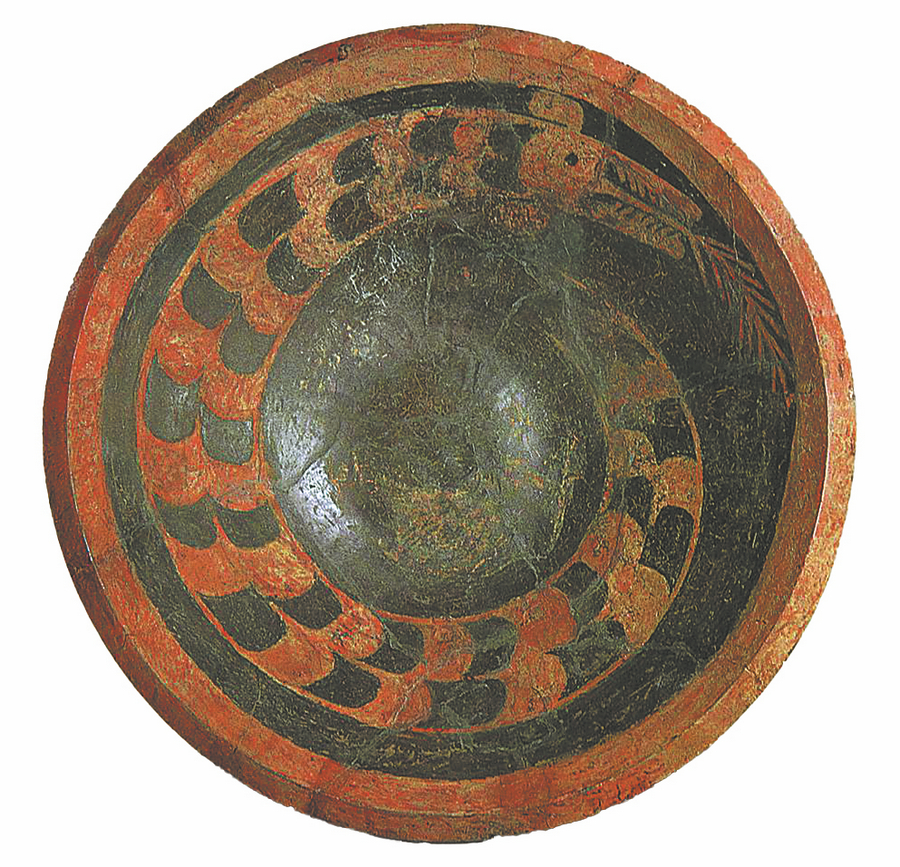
What he has in mind are some pottery pieces unearthed in the area in which the C-shaped dragons are believed to have emanated. These pieces, about half a millennium older than the dragons, are decorated with mythical animals featuring a serpentine body and a dear head or pig head.
A totem complex is what many researchers believe a Chinese dragon is. In a 12th-century piece of writing, a dragon is described as having "the antlers of a deer, the head of a camel, the eyes of a rabbit, the neck of a snake, the belly of a mollusk, the scales of a fish, the talons of an eagle, the paws of a tiger and the ears of an ox".





