Exhibition expounds on 'vision and verse' in Chinese art










Literati painting
Self-expression, filtered through literary sensibilities, was at the heart of a unique Chinese art phenomenon known as "the literati painting", of which Zhao Mengfu (1254-1322) was a powerful exponent.
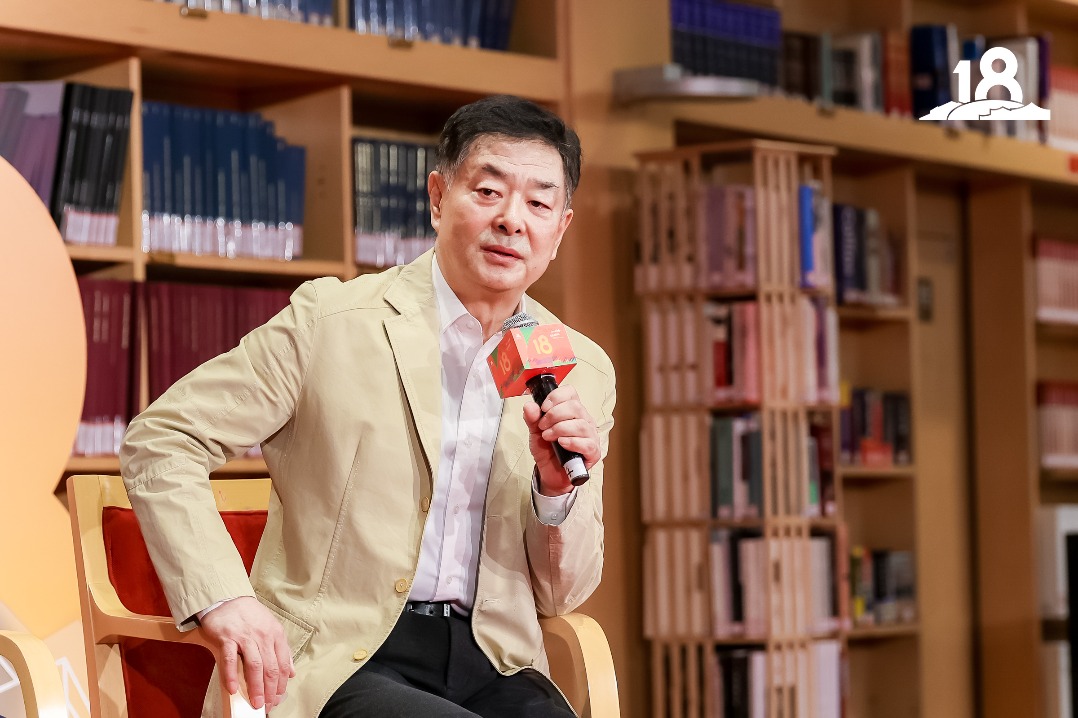
Zhao came up with the idea that "calligraphy and painting share the same source", which may sound to some like Wang Wei's take on the relationship between poetry and painting. "It's more like an homage that represented another key development in the creation and acceptance of the concept of literati painting," said Dolberg.
"Zhao probably had started reading poetry since (the age of) three. And the idea that he wasn't aware of most of Wang Wei's writings is just not credible," he continued.
"So he was trying to add to Wang's idea by saying that painting can't just be painting — it has to be like poetry, it has to be like calligraphy, otherwise it's not suited to a gentleman who's a member of the literati."
And for a painting to live up to that standard, it naturally had to include poetry and calligraphy which, together with painting itself, made up for the so-called "three perfections" required of a literati painter.
"The idea of a painter writing his own poem rendered in his own calligraphy to create this kind of total artwork had fundamentally changed the landscape of Chinese art for the next 600 years," said the curator. "That's why we need to take a deep look into the poetry of Chinese painting, not just as a way to gauge feelings and emotions, but also as a resource for understanding what it means to be part of the Chinese culture."
That being said, the feelings and emotions, even concealed in allegorical images or a landscape inspired by a nature vignette composed by Wang Wei or Du Fu, had never failed to resonate with a listening heart.
"When we were young and vigorous, we flew about in high spirits …In our old age, both of us have suffered disappointments: once again we were alike," wrote Wang Jian of himself and his friend, for whom his album of Du Fu poetry-inspired landscape paintings was intended.
"I leave this album with him so that even while reclining, he may still go wandering."