


Chinese autos looking to meet global demand
Market proximity, geopolitical stress, trade frictions lead to more offshore vehicle production










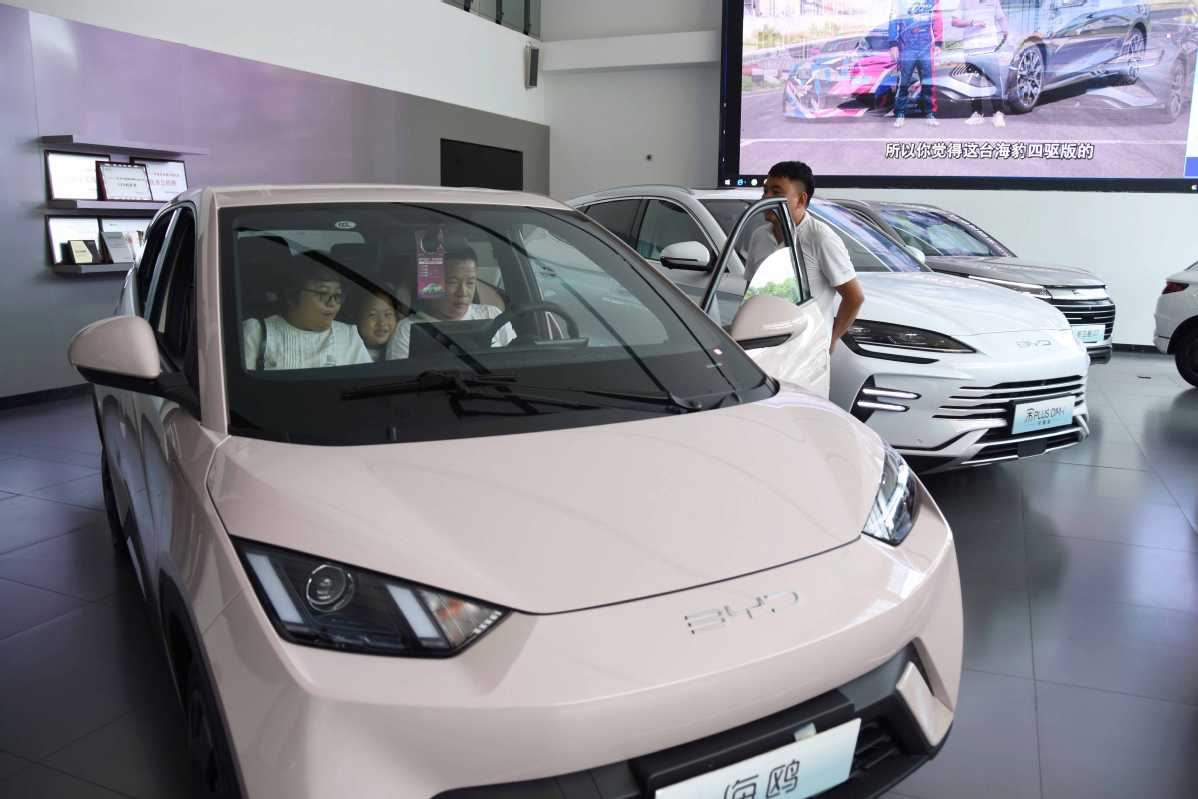
More than 1,000 years ago, an overland trading route starting from present-day Xi'an, Shaanxi province, transported silk and porcelain during the Tang Dynasty (618-907) to West Asia and Europe. Today, the Silk Road still exists, but its cargo has evolved to new energy products, with electric vehicles leading the charge.
Due to cost-effectiveness, improved quality and efficient after-sales service, Chinese new energy vehicles have steadily gained a larger market share by offering affordable solutions to green transition drives in more countries, especially developing economies.
Most recently, Chinese NEVs and auto parts manufacturers are increasingly setting up production facilities overseas, as their foreign clients demand quick responses to their needs and on-time delivery amid heightened supply chain security concerns — all within the context of deglobalization and geopolitical tensions. Central Europe and Mexico are becoming key destinations for investment.
Although some Western politicians and media outlets claim that China is creating excess capacity and dumping products at low prices overseas, experts and business executives argue the notion is unfounded, saying that the growing overseas footprint of Chinese EVs and auto parts makers not only facilitates the global green transition and benefits users by reducing costs, but also offers substantial opportunities for global manufacturers.
"Some foreign media have inaccurately linked China's export growth in recent years to overcapacity, labeling it as 'dumping' without basis. The strong export performance of Chinese branded vehicles is due to improved product quality, technological upgrades and enhanced business services," said Fu Bingfeng, deputy secretary-general of the China Association of Automobile Manufacturers.
The association said that in the first two months, about 831,000 vehicles were exported, representing a 21.9 percent year-on-year increase. Among these, 285,000 were NEVs, marking an 11.1 percent year-on-year increase.
Responding to "overcapacity "accusations, Fu said the current utilization rate of China's NEV production capacity now exceeds 70 percent, which is within a reasonable range.
"China's automotive industry is currently undergoing a transition period (from traditional fueled cars to NEVs). During this transition, investing ahead of market demand is a normal development strategy for the industry. As the market share of NEVs continues to rise, demand for traditional fuel vehicles will gradually be replaced. Consequently, companies will refurbish existing factories and transition to producing NEVs, which is a dynamic conversion process and needs time to adjust production capacity," Fu said.





