


Q: Where is the Great Wall located?










A: The Great Wall spans 404 counties (cities, districts) across 15 provinces (autonomous regions, municipalities), including Beijing, Tianjin, Hebei, Shanxi, Inner Mongolia, Liaoning, Jilin, Heilongjiang, Shandong, Henan, Shaanxi, Gansu, Qinghai, Ningxia, and Xinjiang.
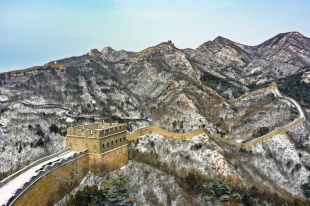
The construction zone of the Great Wall spans approximately from 70° east to 135° east longitude and from 40° north to 42° north latitude, stretching east to west across diverse mountain ranges, including the Greater Khingan, Yan Mountains and Taihang Mountains. Mostly built along ridges or strategic points adjacent to these ranges, the Great Wall traverses varied landscapes shaped by the surrounding mountains.
Over its extensive length, the Great Wall encounters a multitude of environmental settings, each influenced by the presence of neighboring mountains. These varying terrains contribute to the diverse landscape through which the Great Wall extends, enhancing its strategic importance and architectural diversity.
For over two millennia, the Chinese have constructed the Great Wall in northern regions to compensate for the absence of natural barriers, safeguard against incursions by nomadic tribes, regulate the interface between agricultural and pastoral societies, and mitigate conflicts. This monumental effort reflects the strategic, economic and social priorities of successive Chinese dynasties, aiming to protect and stabilize the region.
Shaped by its geographical setting, the Great Wall serves as both a defensive barrier and a cultural meeting point, fostering a shared identity among the Chinese and promoting ethnic integration and the advancement of civilization. Its presence not only marks a historical line of defense but also symbolizes the blending of diverse cultures and the unification of various ethnic groups under a common heritage.