


Wuhan zoo welcomes first baby flamingo









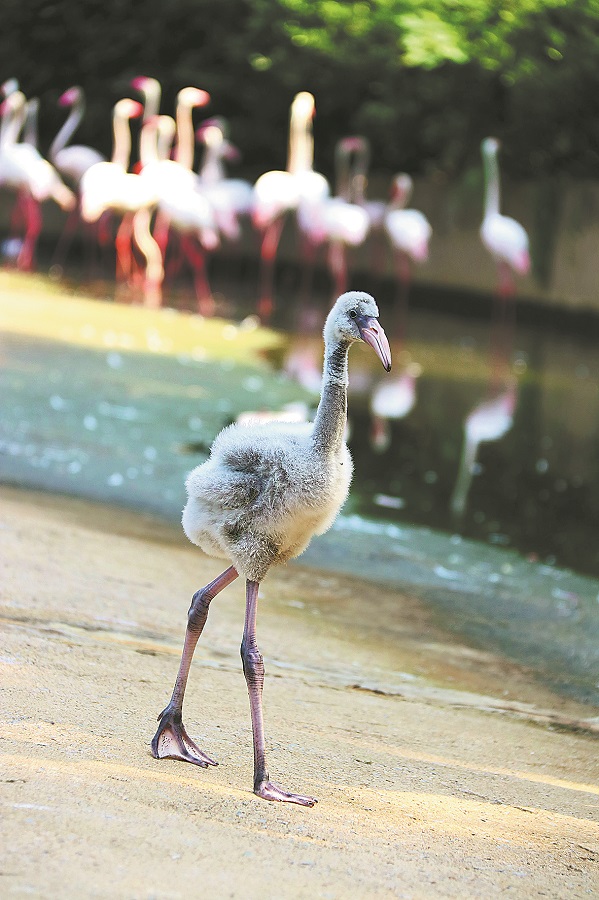
A baby flamingo hatched in an incubator at Wuhan Wildlife Kingdom recently, marking the first successful captive breeding of the species in Hubei province.
Flamingos, which typically inhabit the shallow waters of salt lakes, marshes and lagoons in temperate and tropical regions, are relatively rare in China. The complex breeding environment posed challenges for their daily care and reproduction.
Wuhan Wildlife Kingdom initiated a captive breeding program for flamingos to tackle the issue. The team gained a deep understanding of the birds' ecological habits, dietary preferences and reproductive characteristics through six years of feeding and observation, according to the park.
A team of experienced caregivers and breeders was assembled to study the birds' environment, feed and the impact of human intervention. Guided by domestic animal experts, they created a recirculating water system within the flamingo enclosure and installed new sprinklers.
The outdoor area was renovated to simulate the humid and secluded environment of the flamingos' natural habitat, adding shrubs and other vegetation.
Apart from improving infrastructure, caretakers made precise adjustments to the flamingos' feed, which also contributed to the successful mating.
Chen Xiaoying, one of the caregivers, said the newborn bird needs to be fed milk through a dropper almost every two hours. It is also highly sensitive to changes in temperature and needs to live in an environment kept between 33 C and 35 C.
"Even slight changes in temperature could lead to respiratory illnesses," Chen said.
Caregivers will continue to look after the young bird until it is 6 months old and then plan to reintroduce it to the flock, she said.
Zhao Yongqiang, the head of animal care and breeding at Wuhan Wildlife Kingdom, said the zoo has welcomed 437 baby animals in six months, including a brown bear, a giraffe and a demoiselle crane.
"Kangaroos and miniature horses are also expected to give birth soon," Zhao said. He said the team will continue efforts to enhance breeding techniques and create better conditions for the reproduction and survival of more rare animals. It will also organize science education classes to enhance public awareness of rare wildlife protection and encourage more people to participate in conservation efforts.





