


And that's one of the reasons Wu and his fellow scholars, some from Greece, had attended the first World Conference of Classics in Beijing from Wednesday to Friday. Held under the overarching theme of"Classical Civilizations and the Modern World", the event included a parallel forum titled "An Ethical Dialogue between Confucianism and Ancient Greek Philosophy".
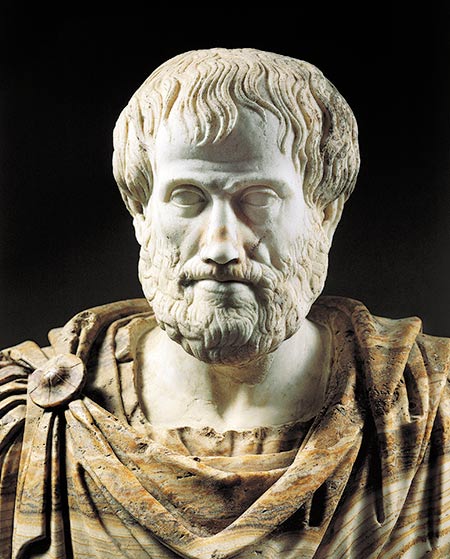
"On one hand, we have Aristotle's theory of Form and Matter, which proposed that everything in the natural world is made up of both form (shape, structure) and matter (substance)," says Wu. "On the other hand, we have Confucius telling us that a man should try to strike a balance between external refinement and inner simplicity."
The comparison also reveals a subtle difference in emphasis. The Greek philosopher, who wrote in his Metaphysics that "all men by nature desire to know", was clearly driven by a sense of wonder — an impulse that Plato described as the very foundation of philosophy.
Confucius, for his part, had developed his philosophy as a direct response to societal instability and moral decay he observed around him.
This distinction in focus is also reflected in their respective approaches to truth and knowledge — two core concepts central to any philosophical tradition. For ancient Greek philosophers, knowledge was pursued as a path to understanding the world, often through intellectual debate and critical inquiry. The Socratic method, that of teaching and discovery, involved a process of dialectical questioning. The aim was to stimulate critical thinking by asking and answering questions that uncovered underlying assumptions and contradictions.








