


Traditional Mongolian ethnic attire symbolizes cultural revitalization









For Meng Genhua, a dedicated Mongolian artisan, her greatest joy stems from seeing her traditional ethnic attire business grow from a humble 20-square-meter workshop to a thriving 500-square-meter store in nearly four decades.
This transformation not only underlines her entrepreneurial success but also symbolizes the revitalization of China's ethnic heritage.
Growing up in a herding family in Otog Front Banner in Ordos, a city in North China's Inner Mongolia autonomous region, Meng was very young when she began learning how to make traditional Mongolian clothing from her mother, a well-known local tailor.
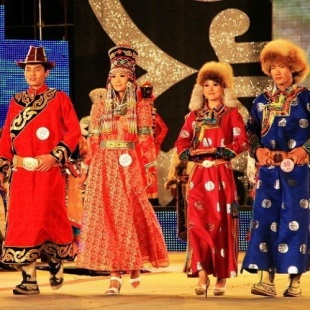
Once used as daily wear, Mongolian attire, characterized by silk and satin fabrics, intricate designs and vibrant colors, gradually became less common with the increasing popularity of modern apparel. Meng, however, felt a deep responsibility to preserve and renew the traditional cultural treasure.
In 1985, Meng began her career by opening a small family workshop. "Initially, customers rarely came for clothing but for mending clothes or sewing on buttons," she recalls. At that time, the shop functioned more as a tailoring service than a clothing store.
Occasionally, Meng's traditional Mongolian robes caught the eye of older customers who were amazed by her mastery of an almost forgotten traditional technique. Word began to spread and Meng's business flourished.
In 2011, Meng founded a company specializing in the trade of Mongolian ethnic attire. A year later, she was recognized as a municipal-level inheritor of the intangible cultural heritage of Mongolian clothes manufacturing in Ordos.
With the rise of cultural tourism across China in recent years, public interest in traditional craftsmanship has been reignited. Seizing this opportunity, Meng advanced her career by blending traditional elements with innovative designs.
Today, in addition to daily wear, Meng's store offers wedding garments, performance costumes and accessories.
Meng is dedicated to passing on her craft. Since 2015, her company has partnered with a local vocational high school to offer training courses, which has benefited over 300 students. More than a dozen of her apprentices have gone on to open businesses.
Among these inheritors is Sarula, Meng's daughter. "Mom taught me to sew as a child. The sewing machine was my plaything," she says.
After graduating from university, Sarula taught art at a local vocational high school from 2004 onward. However, in 2017 she decided to shift her focus to garment design.
"We're preserving Mongolian ethnic features like the mandarin collar, frog buttons and trim colors in everyday wear. We also draw inspiration from traditional Chinese garments and modern clothes, simplifying designs and opting for low-maintenance, washable cotton and linens," Sarula says.
In 2023, the government of Otog Front Banner invested over 2.88 million yuan ($395,400) in preserving traditional Mongolian attire. The government plans to promote cultural tourism, train professionals and build exhibition halls to further protect and celebrate ethnic clothing.