Japan's LDP reels from trust crisis
Analysts warn of instability as funding scandals weaken ruling party's grip









The long-standing issue of political funding has weakened grassroots support for Japan's ruling Liberal Democratic Party, forced its coalition partner Komeito to quit, and undermined the party's traditional mechanisms for holding power, analysts say.
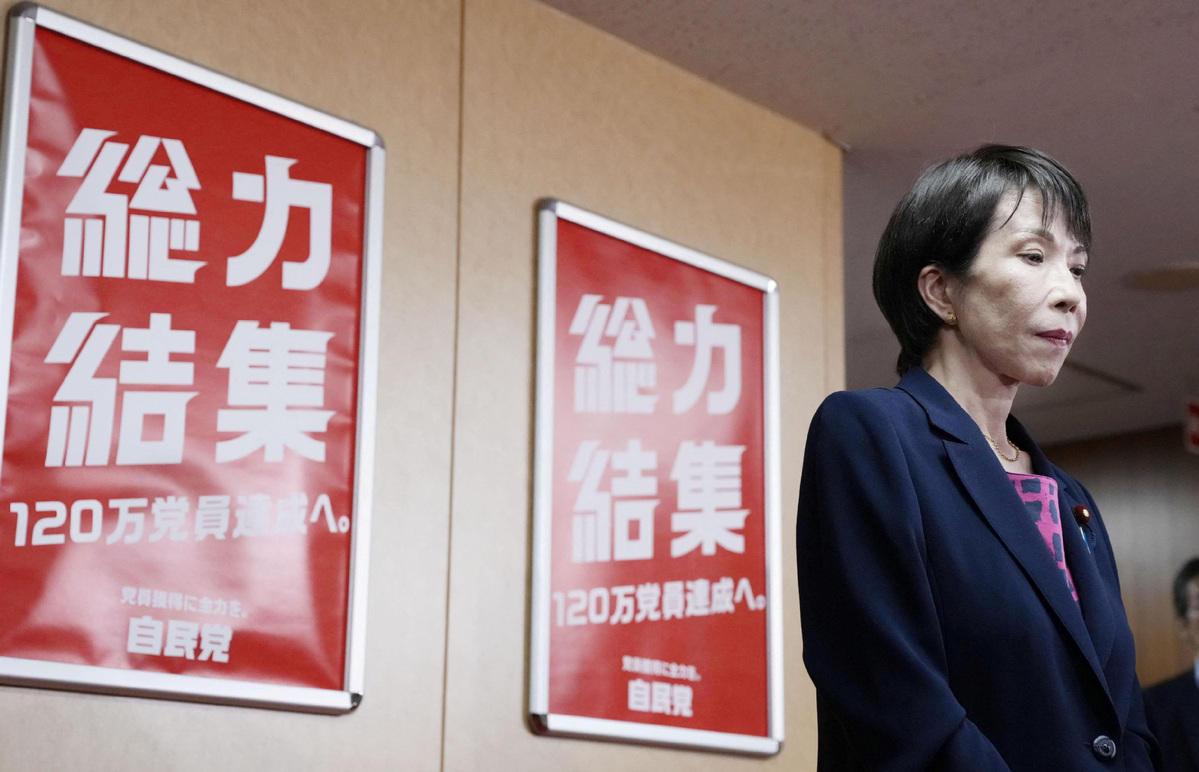
The Komeito leader Tetsuo Saito cited the LDP's "insufficient" response to the political funding scandal when he announced on Friday that his party would end its 26-year alliance with the LDP. The breakup deals a major blow to LDP President Sanae Takaichi and could leave Japanese politics shrouded in uncertainty, analysts said.
Shigeaki Koga, a policy analyst and former official at the Ministry of Economy, Trade and Industry, said the LDP has long relied on corporate donations, making real changes difficult.
Pursuing reforms would weaken the party's ability to mobilize voters and secure funding, which is why no one has dared to tackle the issue at its root for many years, Koga said.
In the past, even with a limited number of supporters, the LDP managed to maintain its position as the country's largest party and its parliamentary majority by effectively consolidating those votes, he said.
"But that model is now becoming unsustainable," he said, adding that the party's support base has significantly weakened in recent years, with its traditional voter groups gradually eroding.
Following Takaichi's election on Oct 4, her decision to appoint lawmakers implicated in the scandal — including Koichi Hagiuda as LDP acting secretary-general — has further deepened mistrust within Komeito.
Komeito's exit from the ruling coalition has made the appointment of Japan's next prime minister more uncertain, with the vote originally scheduled for Wednesday now postponed to at least Oct 20.
"This development will have a major impact on the selection of Japan's next prime minister," said Hiroshi Shiratori, a political science professor at Hosei University in Tokyo.
It is "almost impossible" for the LDP to secure a new coalition partner before Oct 20, Shiratori said. "Currently, the party is in direct competition with most opposition parties across nearly all constituencies."
Even if Takaichi managed to narrowly win, she would probably lead only a minority coalition cabinet with an unstable governing base, leaving the policy agenda vulnerable to opposition influence, he said.
"This could result in a lack of clear direction, policy drift and a state of political aimlessness in Japan."
The way out of this predicament, Shiratori said, would be for opposition parties to unite behind a single candidate who can control policymaking and ensure more coherent, strategically focused governance.
Parliamentary system
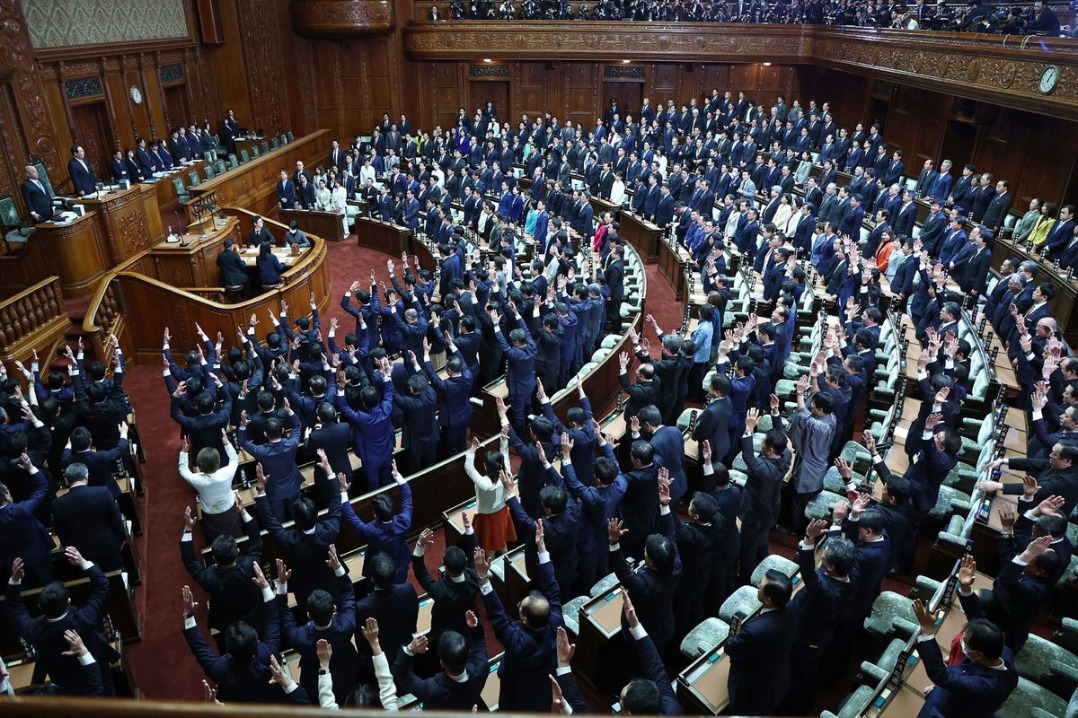
Under Japan's parliamentary system, both houses of the Diet vote to choose the prime minister. If the two chambers select different candidates, the decision of the lower house prevails.
A candidate who obtains a majority in the first round is immediately appointed prime minister. If no one secures a majority, a runoff is held between the top two contenders, and the one with the higher vote count is appointed, even without a majority.
The LDP now has 196 of the 465 seats in the House of Representatives, and Komeito has 24. In the upper house, the LDP has 100 of 248 seats, and Komeito has 21.
The opposition camp, comprising the center-left Constitutional Democratic Party, the center-right Democratic Party for the People, and the right-leaning Japan Innovation Party, together control 210 seats in the lower house, exceeding the LDP's total.
Japanese media reported that the leader of the Democratic Party for the People, Yuichiro Tamaki, is ready to lead the government and is assessing the situation. The largest opposition force, the Constitutional Democratic Party, is trying to rally opposition forces behind Tamaki, and if the Japan Innovation Party joins the coalition, it could open the door to a government change.
However, The Japan News said the motives of the three parties remain complex, and how the negotiations unfold remains uncertain.
houjunjie@chinadaily.com.cn