New five-year plan crucial for high-quality development










Editor's note: The 15th Five-Year Plan (2026-30) period is crucial for laying a solid foundation for the realization of China's modernization. Dong Yu, executive deputy dean of the China Institute for Development Planning at Tsinghua University, spoke to China News Service to analyze the opportunities as well as structural challenges facing the economic and social sectors of China. He also offered suggestions for advancing the new round of technological revolution and industrial transformation. Below are excerpts from the interview. The views don't necessarily represent those of China Daily.
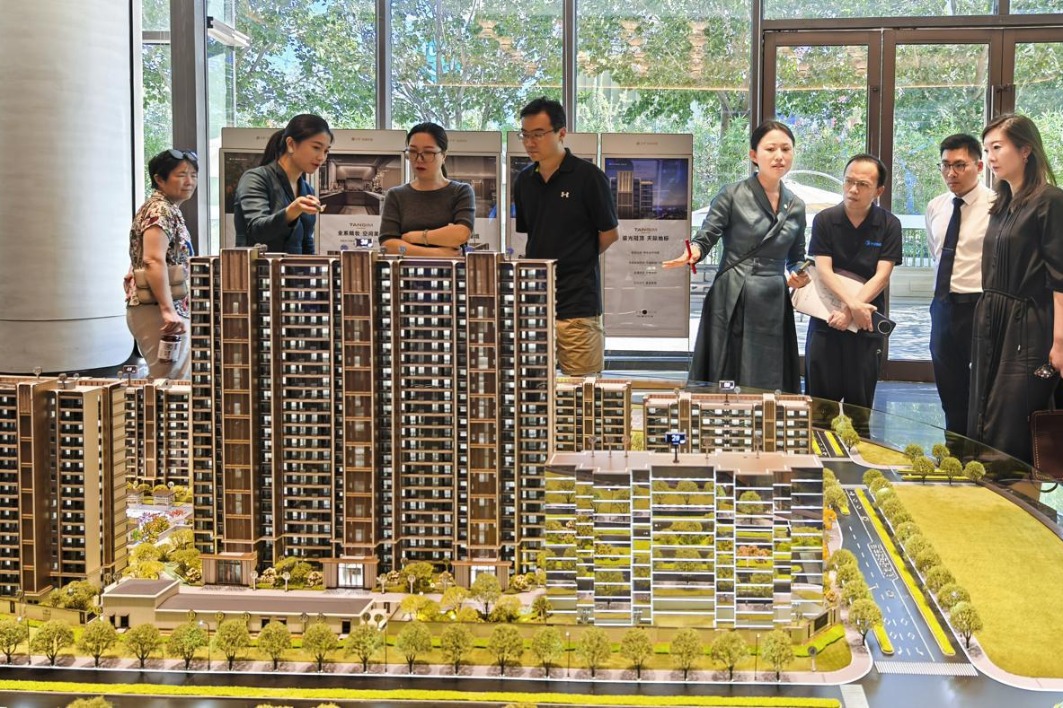
Over the next five years, China will face several structural challenges relating to industrial growth, regional development, urbanization and the demographic structure. The core issue for industrial restructuring is how to offset the weakening of traditional growth drivers. The traditional pillar industries, especially real estate, have lost some economic impetus. Whether emerging pillar industries can rise during the 15th Five-Year Plan period to become the main driving force of economic growth is the foremost challenge facing industrial development.
When it comes to the regional structure, the development of western and central areas continues to be important, but is no longer the main issue. The focus now is on whether the growth poles in western regions can effectively drive broader development, whether existing growth opportunities in the central and western regions can be sustained and whether new growth opportunities can be created.
As for the urban-rural structure, although the pace of urbanization has slowed, China's urbanization rate has reached 67 percent, a record high. The key question is whether public services can keep pace as more migrant workers from rural areas move into cities. This will have a significant impact on the economy, because sectors such as real estate and consumption are closely linked to this development. The central concern remains how to further strengthen the economic growth momentum amid the shift of population from rural to urban areas.
In terms of demographic structure, the number of graduates will continue to hit record highs in the coming five years, even as the total population is declining. Population changes will affect the layout of public services and infrastructure planning in certain regions. Although new birth support policies have been introduced this year, it remains to be seen to what extent they can stabilize the demographic trends.
The industrial focus of the 15th Five-Year Plan will undoubtedly be on fostering new quality productive forces, especially accelerating the transformation from old to new growth drivers. Future industries, though not yet very large, are expected to grow rapidly in the coming years. The transformation and upgrading of traditional industries present both opportunities and challenges.
In the initial years of the 15th Five-Year Plan period, China should focus resources on select future industries to ensure it does not miss emerging development trends. A major advantage is that the country has a comprehensive industrial system, which provides abundant application scenarios for all kinds of innovations. Even if the country lags behind in some areas of technological research and development, strong support on the application side can enable faster progress in experimentation, commercialization and large-scale deployment.
What is needed, therefore, is to avoid imposing too many restrictions when industries are still in their initial exploratory stages. Instead, policymakers should observe and guide development, creating an enabling environment for the rapid growth of nascent future industries. This is another major advantage for China, as efforts are mobilized from both the top and the bottom.
Regarding government support, local authorities are now placing particular emphasis on talent development. Nearly all local development blueprints highlight talent attraction and cultivation, as well as support for start-ups, making China one of the most favorable environments for entrepreneurship in the world.