China's Xixia Imperial Tombs draw growing tourist interest









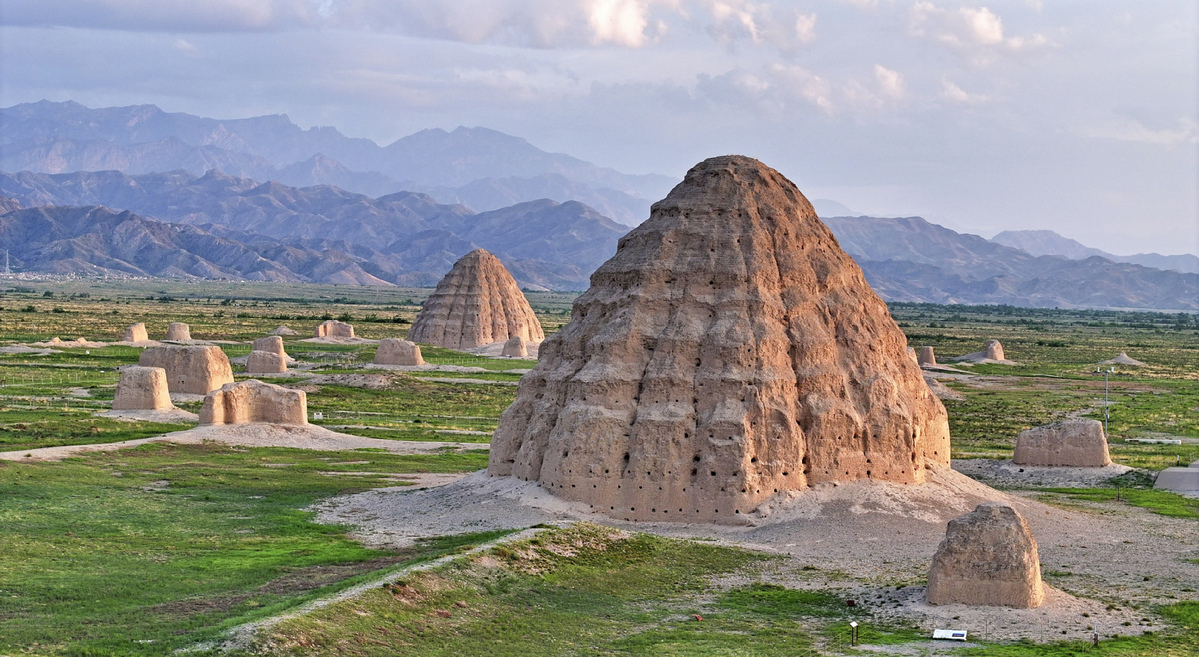
On the eastern foothills of the Helan Mountains in Northwest China's Ningxia Hui autonomous region, the Xixia Imperial Tombs, dormant for nearly a millennium, have experienced a surge in popularity among travelers.
The site received around 1 million visitors in 2025, an increase of about 30 percent compared to the previous year. It ranked among the top scenic sites in Ningxia in terms of the number of inbound tourists, said Chen Xiaoxu, marketing director of the Xixia Imperial Tombs Cultural Tourism Development Company under the Yinchuan Cultural Tourism Group.
"During peak seasons, guides are in short supply," Chen said, adding that the site is recruiting multilingual volunteer guides and offering reservation-based tour services.
The tombs were built by the Tangut, an ethnic group that thrived in Northwest China between the 11th and 13th centuries. Since excavations began in 1972, archaeologists have uncovered nine imperial tombs, 271 subordinate tombs, an architectural complex spanning five hectares, 32 flood control sites and over 7,100 artifacts -- revealing the engineering, artistry and cultural achievements of the dynasty.
The Xixia Imperial Tombs were inscribed on UNESCO's World Heritage List last year, underscoring their importance as a testament to a multicultural civilization shaped by agro-pastoralism and trade in Northwest China.
"The fact that these earthen mounds have survived for so long is a miracle in itself," said Wang Tong, a 33-year-old visitor from Guizhou province who toured the site with his family.
After visiting Tomb No. 3, believed to belong to Li Yuanhao, founder of the Xixia Dynasty (1038-1227), a visitor surnamed Li from Sichuan province, wrote in a social media post that she could imagine people living beneath the mountains a thousand years ago -- farming, forging metal, praying, laughing and grieving. The post drew nearly 20,000 likes.
To satisfy visitors' curiosity about the tombs' underground chambers, the Xixia Imperial Tombs Museum has introduced immersive VR and XR experiences. Key artifacts are displayed in digital cases that enable close examination of their details. An advanced monitoring network covers roughly 40 square kilometers of the site and its surrounding buffer zones, ensuring round-the-clock protection.
More than 160 graded relics have been digitally preserved, supporting the development of about 800 cultural and creative products, according to Na Shan, deputy curator of the museum.
Liu Qianyu, director of Yinchuan's Tourism Development Service Center, said preparations are underway for a mounted battle performance inspired by Tangut nomadic culture, featuring a full narrative storyline, with script development and site planning nearing completion.
Plans are also in place for a large immersive costume experience center, a recreated border market inspired by the bustling trade between Xixia and Song Dynasty traders, and a Xixia-themed restaurant.
"We also plan to link the Xixia Tombs with wineries along the eastern foothills of the Helan Mountain and other scenic sites to offer visitors a more memorable experience," Liu said, adding that the World Heritage inscription has injected strong momentum into Ningxia's push to build itself into an international tourism destination.
The surge of interest in the Xixia Imperial Tombs mirrors a broader nationwide trend.
Across China, more than 7,000 museums -- over 91 percent offering free admission -- now receive nearly 1.5 billion visits annually. The country has also developed 65 national archaeological site parks and more than 200 themed cultural relic tourism routes, linking urban and rural areas through shared historical and cultural resources.
The Communist Party of China Central Committee has released its recommendations for formulating the 15th Five-Year Plan (2026-2030), which call for deeper integration of culture and tourism through the vigorous development of cultural tourism and the use of culture to empower economic and social development.
By further uncovering the site's historical value and innovating how it is presented, the museum hopes more visitors can better understand the diversity and unity of Chinese civilization and appreciate the enduring appeal of Chinese culture, Na said.