


Objects that breathe with life and memory
A new book reshapes nonfiction writing by allowing Jiangnan's artifacts to narrate history themselves, Yang Yang reports.










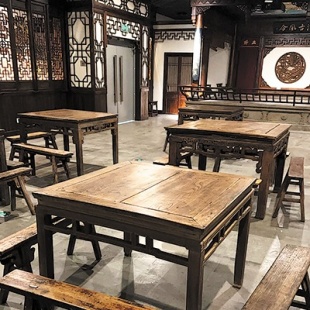
In his nonfiction work Jiangnan Qiwu Zhi (A Chronicle of Jiangnan Artifacts), published in July by Yilin Press, writer Xu Feng tells a story of a carpenter in Qiyin town, a fictional location in Jiangnan, the region to the south of China's Yangtze River.
In traditional historical narratives, carpenters rarely leave their mark. However, when he did research for the book, Xu stumbled upon a poignant story about a carpenter and his wife in a folk song from a small town in Jiangnan.
This song made him realize that when a craftsman and countless ordinary people like him pass away, they might only leave behind a few unsigned pieces of furniture. The personal stories of their joys and sorrows with their families might never make it into official records or family histories, yet these tales are preserved in songs passed down through generations. This discovery became an inspiring and heartfelt starting point for the book.
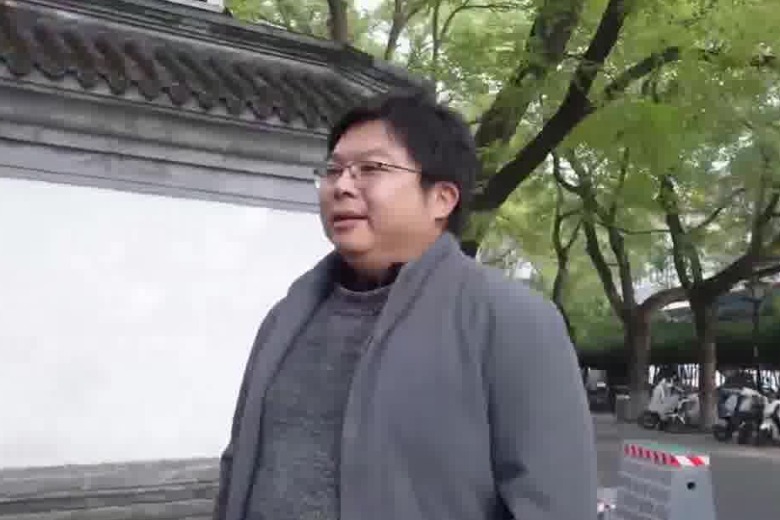
"This is what makes nonfiction writing so powerful," he says, during a discussion about A Chronicle of Jiangnan Artifacts at the Beijing Book Fair, which ended on Jan 10.
Xu says he believes that literature carries a deep responsibility. By understanding historical context and observing human nature, literature can carefully reconstruct and even reshape forgotten scenes, guiding readers back to moments in history that might have existed, he says.
Xu Ke, a writer and member of the National Committee of the China Writers Association, said at the event that the principle of authenticity in nonfiction writing doesn't require strict alignment with reality; instead, it's about exploring the underlying logical connections behind events.
"Xu Feng accomplishes this exploration through detailed searches, travels, research, and fieldwork, enabling the artifacts to 'speak' truthfully," he says.