



'Digital IDs' for EV batteries to enable efficient reuse









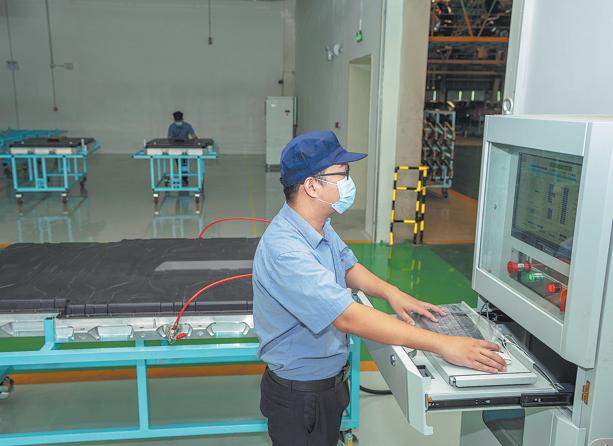
China will assign a unique "digital identity" to every new-energy vehicle power battery to strengthen full-lifecycle supervision and promote safe, efficient recycling, the country's top industry regulator said on Friday.
The move is part of newly released regulations aimed at establishing a standardized system for handling retired batteries, as the country anticipates a massive wave of battery retirements in the coming years.
The volume of retired batteries in China could exceed 1 million metric tons a year in 2030, according to the Ministry of Industry and Information Technology.
Wang Peng, head of the energy conservation and comprehensive utilization department at MIIT, said at a news conference in Beijing that the digital ID, linked to a battery's unique code, will track its entire journey — from production and installation to replacement, vehicle retirement, recycling, and final reuse.
"This represents a significant institutional innovation, applying digital technology to trace the entire lifecycle of power batteries," Wang said.
The measure is included in a document roughly translated as the interim measures for the recycling and comprehensive utilization of retired NEV power batteries, jointly issued recently by MIIT and five other ministries. The rules also clarify the recycling responsibilities of battery and automotive manufacturers.
Power batteries contain not only valuable metals such as nickel, cobalt, manganese and lithium, but also toxic and hazardous materials such as fluoride compounds. If not recycled properly, these batteries can pollute the environment and lead to resource wastage.
With NEV sales soaring, China is facing a rapid increase in retired batteries. Improper handling poses environmental and safety risks, while proper recycling can recover valuable resources like lithium, cobalt, and nickel.
Wang urged consumers to ensure that end-of-life vehicles and their batteries are processed by authorized recyclers, warning against using informal channels that threaten public safety and the environment.
Progress is already being made.
In 2025, over 400,000 metric tons of retired NEV batteries were comprehensively reused in China, a year-on-year increase of 32.9 percent, with leading enterprises achieving internationally advanced recovery rates for key metals.
Wen Xuefeng, deputy director of the department of solid waste and chemicals of the Ministry of Ecology and Environment, said the ministry will work with the State Administration for Market Regulation to launch pilot programs on carbon footprint labeling and certification. It will also enhance international cooperation to explore the mutual recognition of standards, rules and factors, helping to improve the low-carbon competitiveness of power battery products.
Zhu Meina, deputy director of the standards innovation management department of the State Administration for Market Regulation, said the administration will work closely with MIIT and other relevant departments to accelerate the formulation of standards and improve the standards system for power battery recycling.
As for what the public should do if their NEV power battery reaches the end of its life, Wang from MIIT said the recycling of waste power batteries is closely related to personal and property safety, as well as environmental protection. It is not only "everyone's responsibility", but also requires "everyone's active participation".
He called on consumers to carefully review the manufacturer's instructions regarding waste power battery recycling while purchasing a new energy vehicle. After purchase, consumers should provide necessary traceability information, such as the vehicle license plate number, to the manufacturer. Manufacturers are required to fulfill data security protection obligations in accordance with the law and safeguard consumer privacy.
When a vehicle is to be scrapped, consumers should hand over both the vehicle and its power battery to qualified recycling and dismantling enterprises to complete the scrapping procedures in accordance with regulations, Wang said.
The measures also specify supervision, management, and legal responsibilities.
Administrative penalties, including fines, are stipulated for violations such as noncompliance with power battery coding requirements, failure to fulfill recycling responsibilities, improper handling of waste power batteries, and non-reporting of required information.


Today's Top News
- Iran launches retaliatory strikes on Israeli nuclear facility
- Xi sends congratulatory message to 10th CELAC summit
- China releases global high-quality journal list for medicine, life sciences
- Scripting a false South China Sea drama
- Forests forge path to a green future
- Chinese games shift focus to cultural experiences





