Comments
  Print
Print  Mail
Mail  Large Medium Small
BEIJING - Chinese criminology experts have found an underlying reason behind the different criminal patterns of private entrepreneurs and their counterparts in State-owned enterprises (SOEs).
In 2012, the most common crime among private entrepreneurs involved illegal financing, while SOE executives were more likely to take bribes. This divergence is the result of the former's inferior market status, according to a case study conducted by the center for the prevention of entrepreneur crimes under Beijing Normal University.
The study covered 245 cases published by official media in 2012, 158 of which took place in privately owned companies.
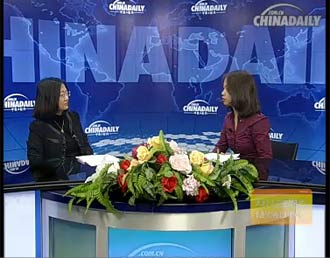
In an exclusive interview with Xinhua on Thursday, Professor Zhang Yuanhuang, head of both the center and research team behind the report, said the distinction should be attributed to the unequal status of the two elite groups in terms of market environment and treatment under economic policies.
The country focused on protecting the interests of SOEs for decades, and the protection of private assets was not added to the Constitution until 2004, said Zhang.
The report specifies that private entities normally experience greater difficulties in market access, obtaining loans or making profits.
The total profits of China's top 500 private companies are comparable to that of the five leading state-owned banks, according to statistics from the All-China Federation of Industry and Commerce released early this month.
The 31 cases involving the illegal pooling of public funds were all committed by private entrepreneurs, and over 45 percent of these cases occurred in east China's Zhejiang and Jiangsu provinces, Zhang's research found.
According to Zhang, this shows the financing difficulties private companies encounter when going through formal banking channels, especially in regions with developed private economies that have been hit by the global economic recession.
The most famous case cited in the report is that of Wu Ying, a businesswoman in Zhejiang, who was sentenced to death in 2009 for financial fraud. After heated debate over the country's fund-raising system, her sentence was reduced to death with two years' reprieve in April 2012.
Wu was found to have cheated investors out of 380 million yuan ($61.1 million) in private lending scams.
Meanwhile, SOE senior executives were found to have taken bribes in exchange for exploiting their positions of control over resources and business opportunities.
Bribery was found in 34 percent of cases involving SOE entrepreneurs, said the report.
The trend shows that some SOE executives are abusing their roles, said Zhang, adding that the monopolies held by SOEs in key economic sectors grant managers in State-owned companies government-like authority to allocate resources -- an authority they sometimes abuse for personal gain.
Zhang identified taking bribes as a serious form of corruption for leaders of SOEs.
The study was meant to detect weaknesses in the current system and offer suggestions for improving the country's market management and rule of law, said Zhang.
"Corporate leaders also need to be warned of criminal risks in addition to commercial risks," Zhang added.
 'Cat model' to dazzle Shanghai auto show 2013
 Models at Tokyo modified car show
 Shanghai Fashion Week focuses on domestic brands
 Angel-dress models at Shandong auto show
 Safe and Sound
 Theater firms scramble for managers
 Premier pledges closer ties with Brunei
 Volkswagen's all-new GTI at New York auto show
Copyright 1995 - 2010 . All rights reserved. The content (including but not limited to text, photo, multimedia information, etc) published in this site belongs to China Daily Information Co (CDIC). Without written authorization from CDIC, such content shall not be republished or used in any form. Note: Browsers with 1024*768 or higher resolution are suggested for this site.
License for publishing multimedia online 0108263 Registration Number: 20100000002731