Comments
  Print
Print  Mail
Mail  Large Medium Small
China takes its economy into the heart of Europe
With imports and exports accounting for nearly half of Chinese economic output last year, trade has become an essential part of its economy and society.
China's decision in 1999 to join the World Trade Organization was a vital catalyst in its emergence as a major economic power. But since 2001, the WTO has been unable to finalize the new trade agreements (known as the Doha Round) that would enable the WTO system to keep pace with a globalizing world.
Nevertheless, countries around the world, including China, have continued to reach out on their own for the benefits of free trade and investment, by arranging bilateral free trade agreements with other countries with whom they see advantages in developing economic ties.
The economic benefits of free trade have been demonstrated time and again. One country's economic strengths are often another country's weaknesses. Removing import restrictions and duties encourages a country to buy products from another country that make them cheaper and better, while exporting more of its own competitive products.
Free trade makes everyone better off, because greater specialization improves economic efficiency, which in turn encourages more trade and economic growth everywhere. History shows that trade between countries after they have signed a free trade agreement grows by as much as 100 percent.
China has used its attractiveness as a large market and powerful Asian presence to establish FTAs around the world with other economies, such as ASEAN, Chile, Peru, Singapore, New Zealand and Costa Rica.
In 2010, China decided it needed to build a free trade foothold in Europe, its largest market and a vital strategic partner, and opened FTA discussions with Switzerland in January 2011.
The Swiss service-based and high-value-added economy is very complementary to China's economy, although much smaller.
But at first sight it would appear that Switzerland has much more to gain than China from a free trade agreement. The removal of Chinese import tariffs as high as 15 percent on machinery imports will further support Switzerland's already strong Chinese trade position, while Switzerland's world-leading banking and insurance companies are big investors in China. Only in certain agricultural products, where Switzerland maintains import duties of more than 20 percent, does China appear to enjoy a significant advantage from liberalizing its Swiss trade.
But the discussions demonstrate a Chinese strategic interest that extends far beyond developing closer economic ties with a much smaller country. Switzerland is located in the center of Europe, and although independent of the European Union, is closely linked economically and by trade agreements to the euro economy, as Costa Rica is with the United States.
With its road and rail links into Italy, France, Germany, Austria and beyond, Switzerland is an excellent place for Chinese companies to position themselves to develop the European market. Under a free trade agreement, China can export components and semi-finished products to Switzerland without paying any Swiss import duties.
Under a Sino-Swiss FTA, some of China's exports to Switzerland, if re-exported to European countries, could displace European agricultural and manufactured products, such as autos and household products. Similarly, some Swiss exports to China that escape import tariffs of 10 percent or more will displace competitors' products from other major exporters of specialized machinery, chemicals and watches, such as Germany, Japan and the US.
Since 2007 Europe has firmly embraced the bilateral free trade approach. Europe has just opened FTA negotiations with Japan, and is holding discussions with the US about developing free trade. China's huge market and its average import duties of about 10 percent represent a very attractive prize for free traders.
Switzerland's example could encourage the EU to consider opening FTA discussions with China, which would have to decide whether to weaken its role as leader of the large group of emerging world countries at the WTO Doha Round discussions, in order to gain the economic benefits of a bilateral European free trade agreement.
The author is a visiting professor at Guanghua School of Management, Peking University. Contact the writer at gileschance@yahoo.com.
 'Cat model' to dazzle Shanghai auto show 2013
 Models at Tokyo modified car show
 Shanghai Fashion Week focuses on domestic brands
 Angel-dress models at Shandong auto show
 Safe and Sound
 Theater firms scramble for managers
 Premier pledges closer ties with Brunei
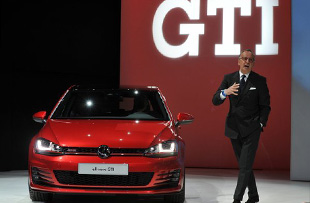 Volkswagen's all-new GTI at New York auto show
Copyright 1995 - 2010 . All rights reserved. The content (including but not limited to text, photo, multimedia information, etc) published in this site belongs to China Daily Information Co (CDIC). Without written authorization from CDIC, such content shall not be republished or used in any form. Note: Browsers with 1024*768 or higher resolution are suggested for this site.
License for publishing multimedia online 0108263 Registration Number: 20100000002731