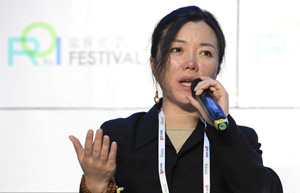
Bessa says labor costs are almost the same in Morocco as in China, so it makes sense for companies to work together.
But some industry leaders do not think China's textile industry has approached its sunset, and instead of retreating from China, have planned major expansion.
Esquel Group, a Hong Kong-based garment-maker, plans to invest 2 billion yuan ($325 million) to build a new factory in Guilin, Guangxi Zhuang autonomous region.
Established in 1978, Esquel is a textile conglomerate running a complete value chain-cotton growing, spinning, weaving, dyeing, sewing, and retailing. It is the largest cotton shirt maker in the world in terms of output.
Last year it made more than 100 million shirts for different brands across the world, with total turnover of $1.3 billion. Every second, eight shirts can be produced in an Esquel factory.
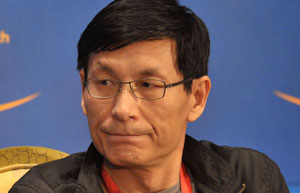
John Cheh, vice-chairman and CEO of Esquel, says it is not necessarily a bad thing that wages keep rising in China. "Rising wage means improved skills, higher efficiency and improved consumption power among Chinese people.
"Labor costs in cheap areas will eventually rise, then we will lose competitiveness eventually; so moving is not a wise solution."
Esquel has factories in Mauritius, Malaysia, Sri Lanka and Vietnam, but it has no intention of moving manufacturing out of China.
Aaron Lee, chief operating officer of Esquel, compares the textile industry in China to the car industry in Europe decades ago.
"By then, everybody was talking about the car industry leaving Europe, as the cost was so high and the competition from Japan and South Korea was so fierce; but now it is still thriving in Europe. That tells us: It is not the cost but the margin that really matters.
"We are thinking more of optimizing the process and adding value than of chasing after cheap labor," Lee says.
Esquel makes only high-end shirts for international brands such as Zara, Ralph Lauren, Tommy Hilfiger, Nike and Muji, as well as some high-end domestic brands in China, so the margin is higher than in making simple T-shirts.
Marks & Spencer is among these major customers. Every year it buys more than $60 million in products from Esquel. Frazer Mead, head of innovation and quality, Far East region, of Marks & Spencer, says China is getting more expensive for making garments, but their business in China would stay relatively stable.
"China represents 60 percent of garments that M&S buys in Asia, and about 40 to 50 percent of the total in the world. In terms of fabric, China represents about 60 to 70 percent of the fabric we use across the world."
Chinese workers' skills and efficiency are so high that they are hard to replace, he says.
"My job is to assess countries' suitability for certain kinds of products. Simple products such as T-shirts, basic trousers and nightwear can be migrated more easily to lower-cost countries; but lower-cost countries generally mean lower skill levels. You have to be careful when you move to Bangladesh or Vietnam so you don't bring products to them for which they have yet to develop the skills.
"China is a world leader in terms of raw materials such as fabric, especially linen, cashmere and silk. And the innovation is getting better, driven by the competition from South Korea."
Over the years, China has also changed from a manufacturer of cheap garments to a major market for international brands, so being in the country also means being close to the most dynamic market.
Ten years ago, almost all garments made by Esquel were exported to Western countries, but now the ratio of products exported to the United States has dropped from 70 percent to 40 percent, says Cheh. "Domestic clients account for more than 12 percent, from zero 10 years ago. Some are domestic brands, some are foreign brands buying directly in China and selling them in the Chinese market under their brands."
The ever-changing taste of Chinese consumers means brands have to keep innovating by creating new designs and new functions, which raises new requirements for garment manufacturers.
Lee of Esquel says that every season, the company calls a meeting to talk about the new research and development and new designs, so its clients can come and decide which new elements and new functions they want to incorporate into the products.
"We are not just selling them shirts. We have a lot of interactions with our clients. We do our part, such as R&D, design and merchandising to be supportive," Lee says.
Mead says with the burgeoning middle class and well-defined education system in China, not everybody wants to wear garments with a big logo. "People are looking for fashionable, but also something that would last more than one wash," he says.
Building a high-end brand is another way to raise the margin, experts say, but so far no Chinese company has succeeded in building an internationally renowned brand. Even Esquel is still at the very early stage of building its own premium shirt brand, and the premium brand Pye contributes only a fraction of Esquel's total revenues.
Wang of the textile council suggests companies innovate more with new materials so they are able to come up with more functional materials. "So they can be less dependent on cotton," he says.
"Textiles is the only industry in which China has a strong advantage in the world, and we have good reasons to keep it alive," Wang says.

Copyright 1995 - . All rights reserved. The content (including but not limited to text, photo, multimedia information, etc) published in this site belongs to China Daily Information Co (CDIC). Without written authorization from CDIC, such content shall not be republished or used in any form. Note: Browsers with 1024*768 or higher resolution are suggested for this site.
License for publishing multimedia online 0108263 Registration Number: 130349