|
|
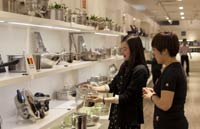
Customers shops at a pharmacy in Ningbo, Zhejiang province May 5, 2015. [Photo/IC] |
The country's economic planner said the prices of most drugs, aside from anesthetics and grade-one psychiatric medications, whose prices will remain under government control, will not increase as a result of the caps being removed.
The State and the market will jointly establish a scientific pricing system, according to a statement from the NDRC, which also urged the strengthened supervision of medical costs and prices to ensure fair competition.
"China's pharmaceutical market is genuinely competitive with increasingly strong supervision. Now is an appropriate time to let medicine prices be set by market competition," an NDRC spokesman said.
The commission said that the move would encourage reasonable pricing and market competition in the world's second-largest pharmaceutical market-only after the United States-and help control costs in State medical insurance schemes. Experts also said they expected medicine prices to remain unchanged.
"This is the first step in the relaxation of drug price regulation. The change is unlikely to have a significant impact on China's pharmaceutical market," Zhu Hengpeng, a public policy expert at the Chinese Academy of Social Sciences, told the Beijing News.
He said that most of the drugs involved are those that are included in the catalog of medical insurance schemes which are usually sold through hospitals, the prices of which are currently set by local government procurement departments.
"Drugs will be sold at slightly cheaper prices at retail stores than in hospitals, but there will not be big price difference, since that would go against normal market rules," Zhu said.
Liu Yugang, an independent pharmaceutical analyst, said: "This is a good gesture that respects the law of the market. It will have a positive impact on the sector. The move will help to improve the sales conditions of lower-price drugs, the supply of which fell short of demand under the earlier price ceiling."
Medicine sales in China hit 1.1 trillion yuan ($180 billion) in 2013, a 35.7 percent rise compared with 2011, according to data from Wind Info.
During the same period, medicine sales from hospitals stood at 842.7 billion yuan, a 38.2 percent increase.
The country's spending on medicines dispensed from hospitals is expected to hit $185 billion by 2018, according to IMS Health, an international market research firm.
Analysts have regularly predicted that drug prices would become more reasonable if the State drugs procurement system was canceled, and a price negotiation mechanism was established with pharmaceutical firms.

Copyright 1995 - . All rights reserved. The content (including but not limited to text, photo, multimedia information, etc) published in this site belongs to China Daily Information Co (CDIC). Without written authorization from CDIC, such content shall not be republished or used in any form. Note: Browsers with 1024*768 or higher resolution are suggested for this site.
License for publishing multimedia online 0108263 Registration Number: 130349