|
|
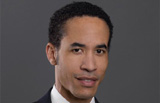
Henry Paulson, former US Treasury secretary, speaks during the 2015 Milken Institute Global Conference held Monday April 27, 2015 at the Beverly Hilton Hotel in Beverly Hills, California.[Photo/IC] |
The most difficult task for the two sides is to finalize and reach a consensus on the size of the negative list, Henry Paulson, the former US Treasury secretary, said during a news conference in Beijing on Monday.
"It was a very big and positive change when China agreed to publish the negative list. So now the key will be to make this list as small as possible," he said.
Premier Li Keqiang had expressed China's willingness, during a meeting with US Secretary of State John Kerry in Beijing last month, to speed up negotiations over the BIT, for an agreement on terms and conditions for direct investment between the two sides.
The negative list from China, which has not yet been disclosed to the public, identifies some industries that will not be open for US investment.
Li has called for pushing forward talks about the negative lists in a constructive manner.
The US has already provided its negative list to China, but Finance Minister Lou Jiwei said in April that "China was uncomfortable with it".
President Xi Jinping will make an official visit to the US in September, which is seen as an important chance to strengthen cooperation between the world's two largest economies, but the Sino-US bilateral relationship is becoming more complicated, according to Paulson.
"If both countries make the BIT a top priority and use a lot of political will it can be achieved quickly. I hope President Xi Jinping and President Barack Obama will use their meeting to make further progress on the BIT and give us some good news," he said.
The Paulson Institute, a think tank established by Henry Paulson that promotes environmental protection and sustainable development in the US and China, gathered US CEOs and government officials in February in New York to build support for the BIT, talking about how they can work to get the agreement finalized.
To tighten the relationship between China and the US will be more challenging and even more important now, as the forthcoming US presidential elections arouse a tendency among leaders running for office to blame US economic issues on other countries, the former US Treasury secretary said.
Li Jing, deputy chief of the Trade Law Research Center at East China University of Political Science and Law, said the BIT negotiations will be a challenge for the two countries, as the negative lists will decide which industries will be fully open to each other.
"The US expects China to open industries including financial services, e-commerce, oil refining and media, which are related to the core national interests."
"Meanwhile, the US will also consider whether its opening up process can affect its national security, job opportunities and the needs of local enterprises," said Li.

Copyright 1995 - . All rights reserved. The content (including but not limited to text, photo, multimedia information, etc) published in this site belongs to China Daily Information Co (CDIC). Without written authorization from CDIC, such content shall not be republished or used in any form. Note: Browsers with 1024*768 or higher resolution are suggested for this site.
License for publishing multimedia online 0108263 Registration Number: 130349