Comments
  Print
Print  Mail
Mail  Large Medium Small
China's leadership is relying on urbanization to counter slowing economic growth and support structural reform. But how fast should the process go?
A report by the United Nations Development Program and the Institute of Urban and Environmental Studies under the Chinese Academy of Social Sciences has offered an answer.
The report urged China's leaders to strike a balance between speed and quality in the process of urbanization. The success of the process, the report said, should not only be measured by GDP and urban resident numbers, but also by the livability of cities.
"The most realistic pathway to optimal urbanization may entail a compromise between the quality and scale of urbanization. Such an approach could likely lead to slower aggregate GDP growth than the rapid urbanization scenario, but it will also bring higher human development benefits," Helen Clark, administrator of the UNDP, said at a ceremony to mark the release of the report.
China's urbanization has been breathtaking. It took just 60 years for the country's urbanization rate to leap from 10 percent to 50 percent. The same achievement took 150 years in Europe and 210 years in Latin America.
In the past decade, the process became so frenetic that one foreign newspaper remarked: "Perhaps Rome was not built in a day. But at China's current rate of construction, it would roughly take two weeks."
But urbanization has posed mounting challenges for China's resources, environmental conditions, job market and public services. As more Chinese enjoyed the prosperity of modern cities, they've also had to contend with traffic congestion, skyrocketing home prices and choking air.
By 2030, the nation's urban population is forecast to grow by an additional 310 million people, the equivalent of the entire population of the United States, to 70 percent of the total population. By this point, more than 1 billion Chinese will live in cities. The new urbanites will require more space, water and food, imposing severe environmental pressures.
 4th World Internet Conference concludes
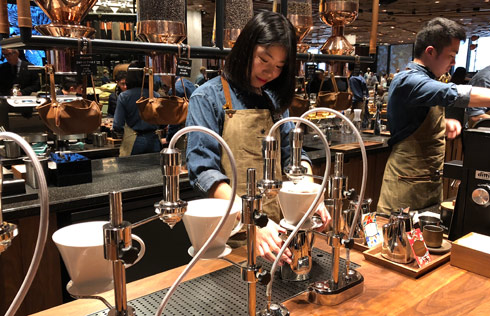 Starbucks Reserve Roastery set to open in Shanghai
 Smile to get discounts in Tmall's unmanned supermart
 Top 10 richest Chinese women in 2017
 World leading internet sci-tech achievements released in Wuzhen
 Top tech CEOs take to the stage as Wuzhen Summit opens
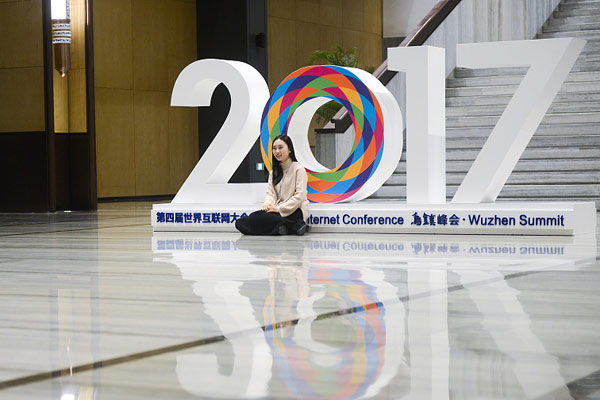 Major topics at 4th World Internet Conference
 'Made in China' dinosaurs amuse the world

Copyright 1995 - . All rights reserved. The content (including but not limited to text, photo, multimedia information, etc) published in this site belongs to China Daily Information Co (CDIC). Without written authorization from CDIC, such content shall not be republished or used in any form. Note: Browsers with 1024*768 or higher resolution are suggested for this site.
License for publishing multimedia online 0108263 Registration Number: 20100000002731