Comments
  Print
Print  Mail
Mail  Large Medium Small
Any country would be arduously challenged by how to put under effective and orderly urban management a floating population the size of China's.
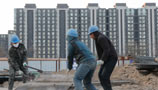
A report published by the National Health and Family Planning Commission on Tuesday indicates that China's migrant population, those who have left their rural hometowns for employment or education elsewhere, reached 236 million in 2012, one-sixth of its total population.
According to the report, the average age of the huge floating population is 28 and more than half of them were born after 1980. Compared with their predecessors who headed to cities mainly to make a living, the new generation usually leaves home earlier and has a stronger will to settle in cities and integrate themselves in the urban areas where they dwell.
With the government's accelerated efforts to advance urbanization, it is estimated that China's cities will face an influx of about 200 million new migrant workers by 2025.
The accelerating influx of people into cities will help spur more domestic consumption, which is needed now that exports and investment are losing steam as main drivers of growth.
But while manufacturing once played a major role in offering employment to migrant workers, its role is on the decline. Only 33.3 percent of migrant workers were engaged in the manufacturing sector in 2013, a decline of 4.1 percentage points from 2011. That means more jobs need to be created in other areas to digest new arrivals.
Especially as the new in-comers, who are generally better educated than their predecessors, have a stronger desire to enjoy the same treatment as their urban counterparts and a greater reluctance to be treated as "second-class" citizens. Their disgruntlement over "trivial inequalities" will more easily emerge than that of their fathers.
The government needs to make greater efforts to push reform of some long-controversial institutions such as the hukou system for household registration, to ensure that migrants enjoy the same services as urban residents.
In this sense, the new Chinese leadership's plan to pursue a new type of urbanization, in which the focus will be on the quality of life and the environment instead of the expansion of the sheer city size, deserves applause for its courage in facing the difficulties ahead.
 4th World Internet Conference concludes
 Starbucks Reserve Roastery set to open in Shanghai
 Smile to get discounts in Tmall's unmanned supermart
 Top 10 richest Chinese women in 2017
 World leading internet sci-tech achievements released in Wuzhen
 Top tech CEOs take to the stage as Wuzhen Summit opens
 Major topics at 4th World Internet Conference
 'Made in China' dinosaurs amuse the world

Copyright 1995 - . All rights reserved. The content (including but not limited to text, photo, multimedia information, etc) published in this site belongs to China Daily Information Co (CDIC). Without written authorization from CDIC, such content shall not be republished or used in any form. Note: Browsers with 1024*768 or higher resolution are suggested for this site.
License for publishing multimedia online 0108263 Registration Number: 20100000002731