Comments
  Print
Print  Mail
Mail  Large Medium Small
"Cultural heritage should be preserved in the urbanization process when redeveloping the villages, be cautious in chopping trees. Don't fill up lakes and avoid tearing down houses," the urbanization document stated.
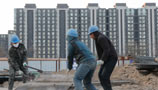
Although urbanization is a sophisticated project that involves various aspects, as shown in the document, the biggest challenge for policymakers is to make the program "human-centric" - in other words, transforming the country's 333 million migrant population into full citizens.
Measured by the number of people who work in cities, China's urbanization rate reached 52.6 percent by 2012. About 260 million rural migrant workers and another 73 million citizens from other cities do not hold local hukous.
This prevents them from accessing various social entitlements such as social security, public housing and education. This in turn has prevented them from spending freely.
In the decision following the third plenum, Party leaders said they would incrementally integrate migrant workers into cities: fully remove hukou restrictions in towns and small cities, gradually ease them in mid-sized cities and set clear conditions for migrants to settle in big cities, while strictly controlling the population in mega-cities.
Resettlement costs will be another major factor for policymakers because they deal with the urbanization problem, experts say. According to a report published by the Development Research Center of the State Council, it costs roughly 80,000 yuan ($13,100) to make a migrant worker into a full citizen. Under the current fiscal system, local governments have no real incentive to do this.
A possible solution, provided in the third plenum announcement, is to set up a mechanism that links fiscal transfer payments from the central government with the pace at which farmers become local urban residents: The more the city absorbs migrant workers, the more money they could receive from the central government, which possibly could provide an impetus for local governments. The proposal was mentioned in the December document.
To finance massive infrastructure projects, the third plenum also encouraged local governments to broaden financing "through various ways", such as bond issues.
However, there is still a difference of opinion on whether to rely more on large cities or medium to small cities.
Some support the central government's favored policy exerting "strict control" over the growth of China's largest cities, citing growing problems in large cities, such as traffic jams, pollution and slums.
But many economists argue that restricting the size of mega-cities goes against the principles of economics.
"Mega-cities are where the money flows, people flow and business flows converge. They are where the productivity is," says Li Jian'ge, vice-chairman of Central Huijin Investment Co Ltd, a State-owned investment company.
Copyright 1995 - . All rights reserved. The content (including but not limited to text, photo, multimedia information, etc) published in this site belongs to China Daily Information Co (CDIC). Without written authorization from CDIC, such content shall not be republished or used in any form. Note: Browsers with 1024*768 or higher resolution are suggested for this site.
License for publishing multimedia online 0108263 Registration Number: 20100000002731