BEIJING - Chinese President Hu Jintao said the success of the first stage of China's lunar probe program indicated the nation had joined countries with capability of deep space exploration.

A grand ceremony for success of lunar probe program is held at the Great Hall of the People in Beijing, December 12, 2007. [Xinhua]
|
Hu made the remarks at a grand ceremony held Wednesday morning at the Great Hall of the People to celebrate the first-phase lunar probe project's success.
He said the lunar probe was another milestone in China's space exploration, following the successes of man-made satellites and manned space flights.
It was also another symbolic result of China's efforts to enhance self-innovation and build an innovative nation and a historical stride the nation made in its way toward world's peak of science and technology, Hu said.
According to him, the key to settlement of all problems China is facing lies in independent development.
The development of the nation's scientific and technological strength must be based on economic development, Hu said.
Only when development is regarded as the primary task of the Party in its ruling efforts, will new achievements be made in the development process and will the gap between China and world's advanced standards be narrowed, he added.
Enhancing capability of self-innovation is the core of China's national development strategy and the key to improving the overall national strength, according to Hu.
Development of the real core technologies in crucial fields that are related to the life line of the national economy and to the national security must rely on self innovation, Hu stressed.
"We should adhere to self-innovation with Chinese characteristics and make full use of the socialist system's advantages in centralizing various forces to do a big feat,"Hu said.
Exertions should be made to command a group of core technologies and possess a batch of intellectual property rights in key areas and some fronts of scientific and technological development.
Hu said capable people were the most valued resources for a cause and were the key to the development of the Party's and the nation's undertakings.
"In the final analysis, competitiveness in overall national strength at present is based on competition for capable people, talents with high quality in particular," he said.
The achievements China's space missions have made and experience that have been drawn from them show that only when a conception of taking human as the primary resources is built and when forces of talented people are cultivated, can an initiative status be achieved in fierce international competition.
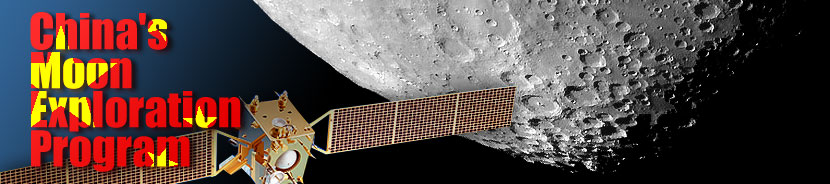
Chang'e I, named after a mythical Chinese goddess who, according to legend, flew to the moon, blasted off on a Long March 3A carrier rocket on October 24 from the Xichang Satellite Launch Center in the southwestern province of Sichuan.
The satellite traveled nearly two million kilometers in its 15-day flight to the moon and reached its final working orbit with a fixed altitude of 200 kilometers on November 7.
The China National Space Administration released the first picture of the moon captured by Chang'e I on November 26, marking the full success of the first stage of the country's lunar probe program.