Editor's note: The following is an interview in which Zhang Lei transcribes the insights of Peking University Health Science Center professor Wang Yifang. Wang's courses prepare medical students for the philosophical questions they'll face when they battle death every day - and often lose.
|
 |
|
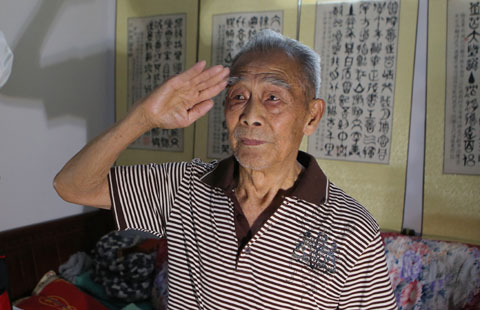
Wang Yifang, Peking University Health Science Center professor. [Provided to China Daily] |
German philosopher Friedrich Hegel said youth know death in a way that's completely different from older people.
If it's for the 20-year-olds, I persuade them to read novels about death. One book recommended to students is Death is So Passionate, in which doctors write about their own experiences with death.
If I'm dealing with a doctor with a lot of experience, probably around age 35, I ask them to provide patients with not only medical but also spiritual care.
Life and death issues are a major problem facing our nation.
Many people believe they can postpone death in today's high-tech society.
A little girl from Guangzhou once asked a doctor: "Why'd my grandma die despite such advanced technology, after my family spent a fortune?"
Nobody can escape death.
This truth torments many.
When two strangers look at each other, they often wonder what the other can provide - money or other benefits?
Relationships and interactions have generally become money-oriented.
Doctor-patient relationships shouldn't be like that. It should be an expression of love, blessings for the suffering, and an understanding of and open mind about death.
Instead, we only manage this relationship according to rational interests ... Such an understanding between doctors and patients has given doctors a bad attitude.
Because they don't have a good approach toward death, they act like laypeople - terrified of death. He shows aversion to a dead patient and walks away immediately after the moment of passing.
Doctors are supposed to be compassionate and dignified. Many hospital morgues are outsourced to third parties and become cash cows.
Families have to pay a lot of money after their loved ones die.
A shroud costs more than 2,000 yuan ($320).
A freezer requires 5 yuan worth of electricity an hour. But the hospital charges 500 yuan.
The philosophy of life and death should be to teach doctors to love.
Human lives are very short.
Patients' stories can't be reduced to medical procedures.
As for purely philosophical thinking: Socrates said in clear terms that to study philosophy is to learn about death. The French philosopher Camus said philosophy is the problem of suicide.
Two millennia of Confucian influence have caused the Chinese to take an "ostrich attitude" toward death: "Because I'm not dealing with death right now, I don't care about it."
Chinese generally lack knowledge about death. Many are as frightened as bolting birds when death comes.
We have virtually no religion. In the West, death becomes easy to accept when the church bells rings. Church bells are a token of life recycled.
But we Chinese live in the moment and exhaust sensual pleasures. Everything is pleasure in the moment. There's no afterlife, no heaven.
The only value is to live.
People want to live forever but can't. This everlasting inconsistency shackles doctors and patients.
Our bodies aren't immortal. But our spirits can be.
Plato lives on because we still read him. His spirit and ideas will continue to enlighten future generations.
You can have a spirit that shines with the same light as the sun and the moon. There should be dialogue between the world and your mind.
Many treat pleasure-seeking as the means to a happy life. But maximized pleasure is a cliff edge. Usually, only cancer patients standing at the precipice of death begin to think about life and mortality.
Survivors cherish life more.
Some people act carelessly. They don't even obey basic traffic rules.
Death education isn't single-sided pessimism. Actually, in a sense, to start to think about death is a way to protect life.
Many people fear talking about death, believing it will lead more people to choose death. This is a misunderstanding.
Only the spiritually enlightened can calmly face death.
I know China is short of instructors like me.
But I must continue opening such classes, despite challenges, because it benefits our children's spiritual growth.
A doctor who doesn't understand life and death is a flawed doctor. The wounded souls of patients who come to the hospital should leave the world without regrets.
About 70 percent of doctor-patient conflicts occurred after the patient's death.
That's because the mechanism to deal with the problem has been ignored.


Copyright 1995 - . All rights reserved. The content (including but not limited to text, photo, multimedia information, etc) published in this site belongs to China Daily Information Co (CDIC). Without written authorization from CDIC, such content shall not be republished or used in any form. Note: Browsers with 1024*768 or higher resolution are suggested for this site.
License for publishing multimedia online 0108263 Registration Number: 130349