综合一区欧美国产,99国产麻豆免费精品,九九精品黄色录像,亚洲激情青青草,久久亚洲熟妇熟,中文字幕av在线播放,国产一区二区卡,九九久久国产精品,久久精品视频免费

Business / Economy

Experts expect localization to boost China-ASEAN industrial capacity cooperation

(Xinhua) Updated: 2016-08-27 11:00

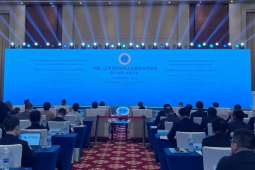
KUALA LUMPUR - As more and more Chinese companies tap into the burgeoning Southeast Asian market, expert and company officials expect localization to be a key aspect to boost industrial capacity cooperation between China and members of the Association of Southeast Asian Nations (ASEAN).

The long-time friendly ties and close neighborhood provide China and ASEAN countries with unique advantages in industrial capacity cooperation, especially under the Belt and Road Initiative, namely the Silk Road Economic Belt and the 21st-Century Maritime Silk Road.

Lu Jianren of China-Asean Research Institute in Guangxi University sees great potential in cooperation between China and ASEAN that was built on solid foundation.

"In the past, we cooperated in traditional sectors like agriculture, now we are working on areas like infrastructure, industrial parks under the Belt and Road Initiative," he told Xinhua in a recent interview during a seminar in Malaysia.

Some ASEAN countries are lagging behind in infrastructure where China has advantages in expertise, he said, adding that China have also provided funding support through mechanisms like the Asian Infrastructure Investment Bank and Silk Road Fund.

China has long advocated win-win cooperation with ASEAN and Chinese companies are attaching greater importance to bringing in benefits to the local communities and industries.

Tang Zhimin, dean of international college at the Panyapiwat Institute of Management in Thailand, said more considerations should be put into ways in better matching China's industrial advantages with the demand of ASEAN countries.

"Localization is very important of industrial capacity cooperation," said Lu.

For China Railway Rolling Stock Corporation, its ASEAN manufacturing hub based in Malaysia is a all-around exploration for the company to expand operation overseas and seek industrial capacity cooperation. The company has put localization as one of the top priorities.

"We use localization to seek breakthrough in industrial capacity cooperation," said Li Hong, general manager of the CRRC Rolling Stock Center.

One year into full operation at the facility, the effort has already bear fruits. In the 50-acre CRRC Rolling Stock Center in the Malaysian state of Perak, local technicians can be seen working side by side with Chinese counterparts.

"More than 80 percent of our total staff and more than 90 percent of the technicians at the production line are local recruited, as well as two of its four department chiefs," said Li.

"We also have our eyes on the future by sending some of the staff to further studies in China, fully funded by the company. We hoped that they could strengthen our management team in the future," he told Xinhua.

On procurement, the company has an office devoted to find, cultivate and support local suppliers, which amounted to some 300 ranging from equipment to transportation.

Li said the purpose of the CRRC's ASEAN manufacturing center was by no means simply sending in Chinese technicians to do the work, but also to boost local economic development and to train local expertise, a common believe shared by more and more Chinese companies.

Hot Topics

Editor's Picks
...
哈巴河县| 龙海市| 许昌市| 呼和浩特市| 天气| 甘南县| 安化县| 舒兰市| 水城县| 义马市| 富锦市| 景德镇市| 建宁县| 资兴市| 广州市| 华阴市| 通化市| 改则县| 泾源县| 原阳县| 锡林郭勒盟| 阿图什市| 绩溪县| 威海市| 三河市| 赤水市| 永德县| 绿春县| 河南省| 旬阳县| 射阳县| 项城市| 天祝| 那坡县| 老河口市| 焦作市| 自贡市| 荥经县| 宝丰县| 建宁县| 广德县|