



Tianjin - A fascinating city worthy of many return visits









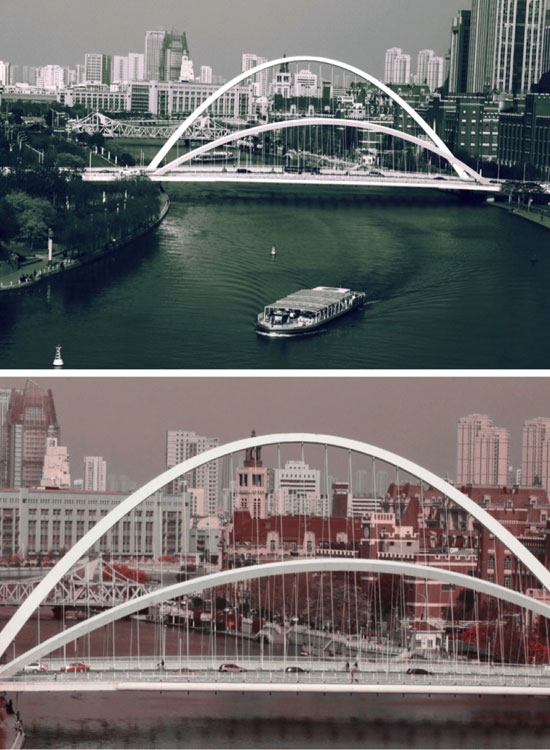
The Haihe River flowing southwards through central Tianjin has long been at the heart of the city’s identity and growth. Walking along its manicured, landscaped banks or sitting at a riverside park overlooking one of the two sweeping meanders or bends within the downtown area it is hard today to imagine the bustle that went on for centuries at this very location - a scene enhanced by the futuristic, cubic shaped St Regis Hotel. Its eye-catching architectural design incorporates “Jinmen” or “Tianjin Gate” for the city over many centuries was indeed a gate, a gateway from the sea to landlocked Beijing and northern China. “Haihe” literally translates as “Sea River” referring to a relatively short stretch of water running from where Tzu-ya River merged with the Nanyunhe, the southern stretch of the Grand Canal close to Jingang Bridge. The Haihe flows outwards to Tanggu before discharging into the Bohai Gulf alongside Tianjin’s vast modern port, one of China’s busiest.
The early city centered on the Drum Tower (Gulou) just south of the Grand Canal was compact, walled and laid out, as was the pattern in many early Chinese settlements, on a strict geographical north, south, east and west layout. Although the walls have gone, the heart of the old city can still be traced. Although commonly thought the name Tianjin was given to the city by Ming Dynasty Emperor Yongle there is also a view it referred to its waters being a gateway or route to Beijing where the word “Tian” or “Heaven” had long associations with past emperors.
Throughout history the city has been an important trading and transhipment center. The Haihe is relatively shallow and prone to silting. Larger sea-going vessels anchor at Tanggu Port with cargoes transferred by smaller vessels and barges upriver to Tianjin with much going onwards along the northern extension of the Grand Canal to Beijing. Certainly the formerly muddy banks were once crowded by small vessels being loaded or unloaded by armies of porters with wooden shoulder poles. Horse-hauled carts would transfer the cargoes to warehouses for onward transportation.





