Millions working in shadow of sharing, but uncaring, economy









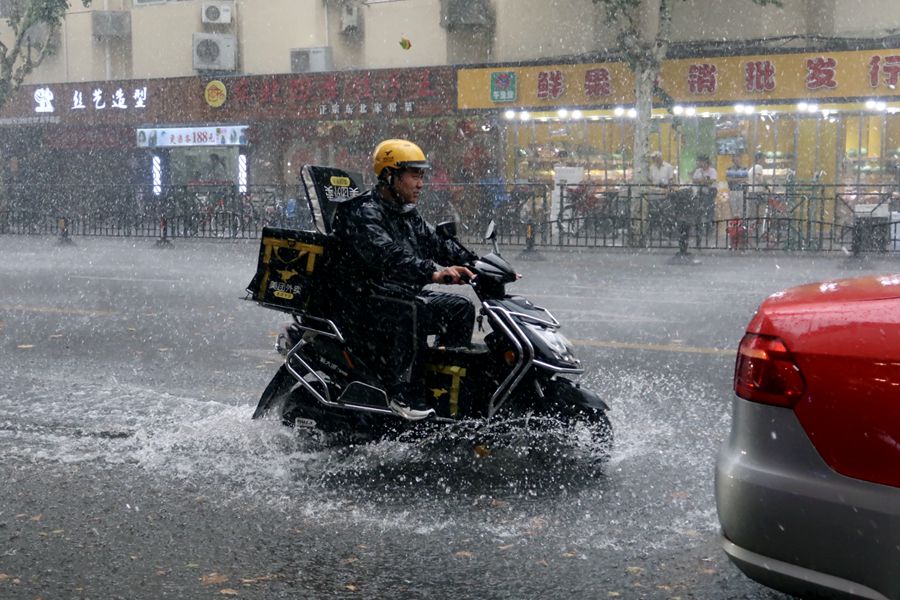
A lack of job security and insurance coverage can spell disaster in the event of sickness or injury
The rapid development of China's sharing economy has seen a growing number of people opting to provide services on a casual basis for companies that operate via online apps, providing designated drivers, cleaners, couriers and food delivery to homes and offices.
About 70 million people were working in the sector last year, and the number is expected to hit 100 million in 2020, according to the State Information Center under the National Development and Reform Commission.
However, the casual nature of the arrangement means that many companies do not offer employment contracts or insurance in the event of sickness or injury, and there is no paid leave. Essentially, if an employee is unable to work, they receive nothing.
Wang Haoyu's story is a case in point. After his pelvis and legs were injured in a road accident in March, the 19-year-old deliveryman spent two weeks convalescing at his dormitory outside the north Fifth Ring Road in Beijing. From his sickbed, Wang watched as his comrades left early in the morning and returned late at night, and the realization that they were earning while he was not filled him with anxiety.
"They were all making money, but I wasn't. On the contrary, someone actually owed me money but wouldn't pay up, so I was quite worried," he said. That "someone" was the driver of a BMW who caused Wang's injuries when he turned unexpectedly, hitting the native of Kaifeng, Henan province, and severely damaging his electric bike.
At the time of the accident, Wang, who arrived in the capital in April, was working as a delivery rider for Baidu Waimai, an online food platform. The severe bruising he sustained left him unable to work, and as he had no medical insurance he had to pay 800 yuan ($123) for health checks and medication, and it cost 1,700 yuan to have his e-bike repaired.
The traffic police concluded that the driver was entirely responsible for the accident and was liable to pay compensation.
However, he flatly refused to pay, and though Wang had the option of suing for compensation, he decided against legal action because it would entail considerable time and energy. Instead, he repeatedly contacted the driver to request compensation, but was turned down every time.
"I only earn 200 to 300 yuan ($30 to $46) a day, but the accident cost me about 2,500 yuan," he said. "What's more, I earned nothing while I was recuperating. I was so depressed."
During his two-week layoff, he was desperate to start earning again. "I just wanted to recover as soon as possible to make money," he said.





- Shanghai Jiao Tong Uni fosters collaborative research through China-Oceania forum
- Global scientists gather at 2025 Pujiang Innovation Forum in Shanghai
- UNESCO inaugurates STEM education institute in Shanghai
- China, US should avoid conflict, defense chief says
- China's 'Dual Carbon' Entrepreneur Stories
- Fujian activates emergency response for Super Typhoon Ragasa