


Exhibition reveals treasures of ancient Buddhist pagoda










Among the skyscrapers and high-rise buildings, 13 ancient Buddhist pagodas still stand in various corners of Shanghai, quietly testifying to its long history and rich cultural heritage.
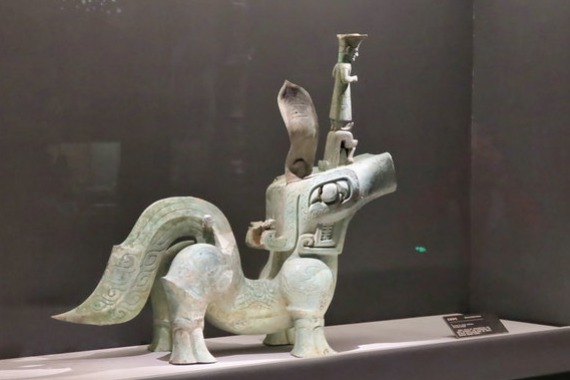
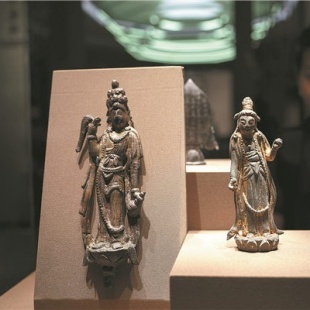
A Towering Treasure House: Relics of the Yuanying Pagoda in Shanghai, an ongoing exhibition at Shanghai Museum East, features a large collection of artifacts unearthed from Yuanying Pagoda in the suburban Songjiang district, the tallest and one of the most important.
Yuanying Pagoda, also known as Xilin Pagoda and Chong'en Pagoda, is a seven-level octagon tower built in 1388 made of wood and bricks that stands 47 meters tall.
Thirty years ago, the pagoda went through a major architectural restoration and archaeological exploration when more than 1,000 artifacts were unearthed from the treasure vase at its top and its heavenly palace one level below and underground palace.
These objects date from the 6th century to the late 1800s. The amount and diversity of the findings drew much attention to China's archaeological scene at the time.
The artifacts "reflected the historical position and unique charm of Jiangnan (south of the lower reaches of the Yangtze River) culture in terms of craftsmanship, philosophical insights and humanistic features, providing invaluable evidence of urban development, cultural vibrancy and the refined lifestyles of ancient Shanghai," according to Chen Jie, deputy director of Shanghai Museum.
Shanghai Museum selected more than 300 pieces to create the exhibition, divided into three sections. The first section recounts the restoration and archaeological exploration in the 1990s, with a lighting installation on the wall illustrating the structure of the pagoda. The inscription on a stone stele documents the history of the pagoda, from its construction to its relocation in 1444. It was after its relocation that the underground palace was opened, with Buddhist statues in gold and silver and Buddhist relics placed in and re-sealed until the 1990s.