


Celebrating a nomadic culture










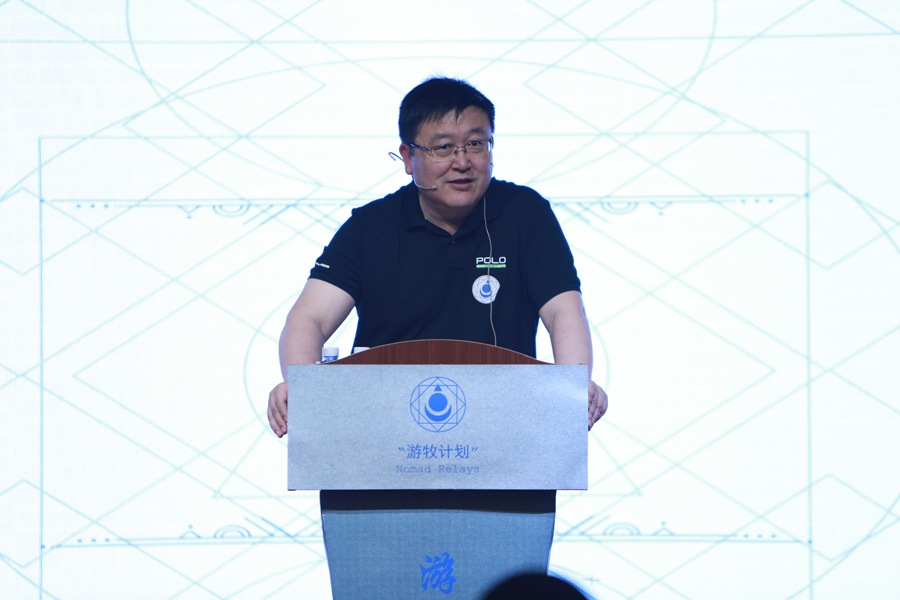
Uragshaa, 46, moved to Beijing with his family in 1976 when he was 4 years old. But his family still maintains the typical lifestyle of the Mongolian people, such as drinking Mongolian milk tea and eating mutton.
Uragshaa became interested in Mongolian culture after reading Japanese writer Yasushi Inoue's novel, The Blue Wolf, which is about the life of Genghis Khan.
And the film director has also used Mongolian ethnic music elements, including the morin khuur (the horse-head fiddle) and khoomei (a traditional throat-singing technique of Mongolia and Tova) in his film productions, including the record-breaking film, The Painted Skin: The Resurrection, and the fantasy adventure blockbuster Mojin: The Lost Legend, which won the Best Visual Effects Award at the Taiwan Golden Horse Film Festival.
Currently, he is working on the Fengshen Triology, which will be followed by another film based on a Mongolian ethnic group.
As for why he launched the Nomad Relays project, he says that it goes back to 2013 when he read an article written by anthropologist Bulag of the University of Cambridge, Department of Social Anthropology about the relationship between nomadic culture and the contemporary world, the spirit of nomadic culture and its future.
Later, he contacted Bulag and when he decided to launch the project, the London-based professor joined in.
Bulag, 53, explains his involvement in the project, saying: "Now, we are all nomads in the age of globalization. We travel and move from one place to another.
"Many people long for their lost nomadic heritage, but it's hard to define nomadic culture now. So we have launched this project to share our ideas with people from different cultural backgrounds."
Hanggai singer Ilchi, who is also part of the project, met Uragshaa about 20 years ago in Beijing at a live house when Ilchi performed there with his early rap-metal band T9.
Ilchi moved to Beijing when he was 12 years old and in 2004, he co-founded the band Hanggai with ethnic Mongolian musicians, including the morin khuur (horse-head fiddle) player, Batubagan, and vocalist-guitarist Yalalt.
Hanggai, the Mongolian term for a place with beautiful pastures, mountains and rivers, is known for combining Mongolian folk music with modern styles. And they have appeared on the international stage, including the Fuji Rock and WOMAD (World of Music, Arts and Dance) festivals.
In 2010, they launched their own world music festival in Beijing.
Giving his take on the project, Ilchi says: "I grew up on the grasslands and I lived a nomadic lifestyle before I moved to the big city at 12.
"So, what we want to express is the musical influence we got from our ethnic background, which makes us unique.
"The spiritual strength of our culture is important to us. We feel we have a responsibility to continue promoting and updating it."
Contact the writer at chennan@chinadaily.com.cn





