When China's architect of reform, Deng Xiaoping, rode Japan's high-speed railway from Tokyo to Kyoto in 1978, he said: "It seems as if the train is pushing behind us, and we need to run right now", which summed up the urgency China felt at the time to catch up with Japan's industrial development.
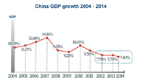
But China's rapid economic growth in the past three decades has seen it overtake Japan as the world's second largest economy and has changed the balance of their relations. It is natural for friction to occur as the two countries find a new equilibrium. There is no denying that China's industrial development has benefited a lot from low-interest loans and technology from Japan in the last three decades or so, but Japan has also benefited a lot from its cooperation with China.
Japanese people need time to get used to the change in Sino-Japanese relations after China's rise as an economic power.
Recently I spent 10 days in Japan as a member of a Chinese delegation of journalists, I found that China can still learn a lot from Japan. Japanese cities are much better managed and they seem cleaner as there were no cigarette butts on the streets and I never saw anyone spitting on the street. The people I met were polite and courteous.
My stay in Japan has convinced me of the necessity for more people-to-people exchanges and for greater communication between the two peoples in order to lay the foundation for further developing the friendship between both countries.
During my trip a veteran Japanese diplomat pointed out that Japan's rise as an economic power caused problems in its relations with the United States in the 1970s and 1980s, and this might provide some insight into why an increasing number of Chinese and Japanese people feel bad about each other in a survey conducted last year.
Despite this, an increasing number of Japanese people are learning the Chinese language and an increasing number of Chinese are learning Japanese. This suggests a growing number of citizens from the two countries are communicating with each other.
Asahi Shimbun, one of the three major newspapers in Japan, officially launched its website in Chinese on April 16 for Chinese readers to read about Japan and those who are learning Chinese in Japan to learn more about China.
Good relations between the two countries are not just in the interests of both countries and peoples, but also of importance to the stability and prosperity of East Asia and the rest of the world.
Japanese politicians should stop denying the atrocities the Japanese military committed in China during World War II, as these comments put a great strain on relations, and they should be aware that China's rise as an economic power poses no threat to Japan.
The politicians of both countries should look to the future, as China and Japan both need a peaceful environment for development and they both need each other. Japan needs China's huge market for its economic growth and China needs to learn from Japan's advanced technology. There is no reason for the two nations to bicker with each other as better ties are in the interests of both countries.
The author is a senior writer with China Daily. E-mail: zhuyuan@chinadaily.com.cn
(China Daily 05/02/2012 page8)


Copyright 1995 - . All rights reserved. The content (including but not limited to text, photo, multimedia information, etc) published in this site belongs to China Daily Information Co (CDIC). Without written authorization from CDIC, such content shall not be republished or used in any form. Note: Browsers with 1024*768 or higher resolution are suggested for this site.
License for publishing multimedia online 0108263 Registration Number: 130349