18th party congress Preview
Three decades of fast growth have transformed China into the world's second largest economy. They have also created an economy that is excessively reliant on investment, exports and capital-intensive industrial development, and in pressing need of rebalancing. And they have exacerbated the gap between high- and low-income groups, and between cities and rural areas.
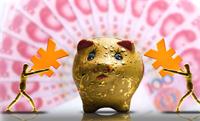
Increasing consumption is frequently pointed out to be the key to reducing China's reliance on exports and investment. However, despite a range of government initiatives, consumption has persistently remained low. At about 37 percent of GDP, consumption in China stands well below other middle-income countries and far below developed economies, depriving the economy of a reliable domestic engine of growth.
The conventional wisdom is that low household consumption is the result of high precautionary savings, that is, people save for education and healthcare expenditure and old age and, therefore, do not spend much. However, low wages are also a major factor. In practice the average Chinese household simply does not have much money to spend.
Despite recent salary increases, total wages over GDP have declined to about 36 percent from 45 percent in the past 10 years. Income inequality is growing. China already has one of the highest levels of inequality in the world. Urban household incomes are, on average, three and a half times higher than rural household incomes. Inequality will hinder future growth, because it undermines consumption, constrains development in poorer regions and generates social tension.
The roots of inequality lie in the growth model adopted over three decades ago. As economic reforms progressed, state redistributive mechanisms weakened. In the 1990s, public services provision was decentralized to local governments without a corresponding increase in fiscal transfers.
In the transition toward a market-oriented economy, only limited taxation has been introduced, while central government transfers for education, healthcare, housing, and pensions have declined. As a result, growth in government fiscal revenues has exceeded income growth.
At the same time, there has been insufficient redistribution from enterprises to households. Soaring corporate profits have not been shared with households. Dividends are seldom paid, equity and bond markets are immature, and pension and mutual funds have not yet been developed. This has kept households' interest income low and, ultimately, repressed consumption.
The government has adopted a range of measures to address these challenges. However, so far they have had limited impact. Social spending has increased but remains low. About 30 percent of government revenue is spent on social security, education and healthcare, compared with an average of 52 percent in other middle-income countries. Moreover, reforms have focused on expanding the coverage of benefits rather than revamping the benefits themselves. Salaries have recently increased rapidly, but lag behind productivity gains and GDP growth. At the same time, higher labor costs are depressing China's competitive edge.


I’ve lived in China for quite a considerable time including my graduate school years, travelled and worked in a few cities and still choose my destination taking into consideration the density of smog or PM2.5 particulate matter in the region.
Copyright 1995 - . All rights reserved. The content (including but not limited to text, photo, multimedia information, etc) published in this site belongs to China Daily Information Co (CDIC). Without written authorization from CDIC, such content shall not be republished or used in any form. Note: Browsers with 1024*768 or higher resolution are suggested for this site.
License for publishing multimedia online 0108263 Registration Number: 130349