


Development is still priority
What is the gist of Deng Xiaoping's thought and how does it apply to China's development today? These questions are worth discussing as the anniversary of his 110th birthday is observed on Friday.
Deng, known as the architect of China's reform and opening-up, has left us many well-known sayings that can be boiled down to the emancipation of the mind and pragmatism.
It was by emancipation of the mind that the class-struggle mindset, which had been dominant for nearly three decades since the founding of New China, was discarded in the late 1970s and early 1980s.
It was by emancipation of the mind that Deng said that some people could get rich first.
It was with the spirit of pragmatism that he said development is the absolute principle, which put a stop to the bickering about which road China should follow: capitalist or socialist.
After more than three decades of rapid economic growth and mismatched social progress, the spiritual legacy Deng has left behind can still serve as guidance.
When Party leader Xi Jinping compared the reforms and opening-up implemented in the past three decades to meat and the task of further reform his leadership faces to bones, he knew well the difficulties that he and his leadership face in deepening implementation.
The anti-graft campaign the new leadership has pursued has already netted several dozens of ministerial or above level officials and thousands of lower level ones, indicating that the new leadership has emancipated their minds and knows where the breakthroughs need to be made in order to deepen reform.
The measures the new government has adopted to simplify governing procedure and delegate some of the central powers to its lower level counterparts or scrap the unnecessary items for approval is a sign that this government is trying to solve one problem after another with the principle of seeking truth from facts, which was also characteristic of Deng.
In the forthcoming Fourth Plenary Session of the Central Committee of the Communist Party of China in November, governing according to the law will be the theme. This suggests that the new leadership realizes that the rule of law is not only necessary but also the key to China's healthy development.
Development is the absolute principle. Bearing this in mind and eliminating any barriers that stand in the way of the country's healthy development will be the best way to memorize Deng on his birthday.
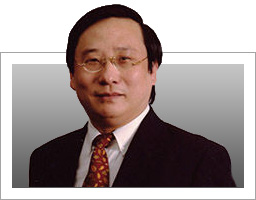
Learn from Deng's diplomacy
Although seventeen years have elapsed since Deng's passing away in 1997, China is still forging ahead in the overall direction of reform and opening-up to the outside world that Deng charted for China after he became the paramount leader at the end of the 1970s. [more]

Revisiting Deng and the socialist market economy
China has come a very long way since Deng Xiaoping articulated his vision of a reformed and modern China in December 1978. More than 35 years after the historical Third Plenum of the 11th Central Committee of the Communist Party of China in December 1978, "socialist market economy" has become a frequently used phrase in modern economic and development literature. [more]

Scholars explore Deng's impact
Ranging from Deng's life and thought to the history of reform in China, the overseas studies of this former Chinese leader have undeniably shed new light on not only his own political, economic, cultural, military, and, diplomatic thought, but also on his important theories including the “One Country, Two Systems” policy that successfully enabled Hong Kong’s smooth return to the Motherland. [more]
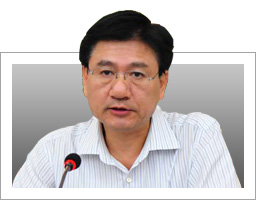
Carry on institutional reform
By directing China's reform and opening-up since 1978 and innovating socialism with Chinese characteristics, the late Chinese leader Deng Xiaoping made a breakthrough in improving the institutional building of modern China, leading the country from the rule of man to the rule of law. [more]


