


They were so close to being favored by emperors. Yet, the road was just too far.
But centuries after being deliberately broken in the workshops of Jingdezhen, Jiangxi province-the center of porcelain production in ancient China-they have finally arrived at their original destination the Forbidden City in Beijing.
Officially known as the Palace Museum today, the Forbidden City became China's imperial palace in 1420 when the Ming Dynasty (1368-1644) was in its heyday. Since that year, myriad porcelain pieces made their way from the imperial kiln in Jingdezhen to the palace to meet the royal demand.
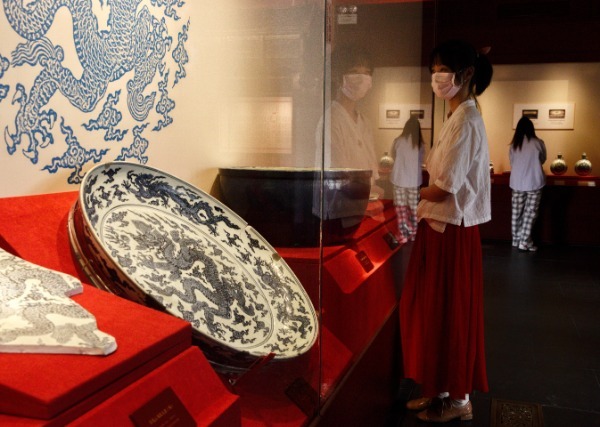
And now the 196 artifacts-either intact porcelains housed in the former imperial palace or restored ones from the broken shards in the ruins of the imperial kiln-h(huán)ave finally arrived at their intended destination and are seen besides the intact imperial porcelains people will appreciate how demanding the palace was of the kiln.
New Views on Imperial Ceramics: Comparative Exhibition of Archaeological Finds from the Ming Dynasty Imperial Kiln at Jingdezhen and Ceramics Preserved in the Palace Museum Collection, which runs through Dec 20 in the Palace of Great Benevolence at the Palace Museum does just that and shows the high standards that needed to be met.
"Put alongside those that were rejected, the glamour of the approved pieces and the quality standards that had to be satisfied are apparent, as it is clear that some failed to find favor due to just a small detail," Lyu Chenglong, a ceramic researcher at the Palace Museum and curator of the exhibition, says.
The imperial kiln was set up in Jingdezhen in 1369, one year after the Ming Dynasty was founded, to exclusively provide daily-use articles for the royal families. Its operation ran until the fall of the Qing Dynasty (1644-1911), according to Lyu.





