
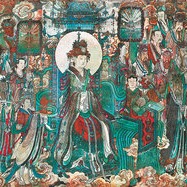



AI shows true colors of iconic artwork
Ancient masterpiece restored for a modern-day audience, report Wang Qian and Zhu Xingxin in Yuncheng, Shanxi.










Divided into five sections — mural art, digital restoration, color exploration, replicas of costumes on the murals and related cultural creative products — the exhibition, which closed late last month, displayed a hand-painted replica of Chaoyuan Tu from the 1980s and an AI-restored version to offer a comparison on how technology has breathed new life into the viewing of ancient murals.
Karalyn Monteil, head of Programmes and Stakeholders Outreach for the Diversity of Cultural Expressions in UNESCO's culture sector, encourages related parties to protect and promote culture in the digital environment, especially in the face of climate change.
Cheng Kun from the Beijing Culture Pieces Development Co, the company behind the exhibition, says that "technology makes it possible to re-create the authentic beauty of the Chaoyuan Tu. Through this exhibition, the Yongle Palace murals, with their unique artistic language, give the world a glimpse into the splendid Chinese culture".
Located in Ruicheng county in Yuncheng, Shanxi province, the mural is the best-known at the Yongle ("eternal joy") Palace, built in the Yuan Dynasty (1271-1368). Known for its approximately 1,005-square-meter frescoes, the Taoist temple complex commemorating Lyu Dongbin, one of the Baxian, the Eight Immortals of Taoism, comprises four wooden structures built along a line running from south to north.




















